

The complete guide
How to Choose a Silk Sleep Mask That Actually Stays Put
The problem with most eye masks
Almost everyone has owned a bad sleep mask. It usually comes free in an airline amenity kit, it is made of thin synthetic fabric stuffed with a bit of wadding, and the band is a loop of elastic that digs in behind the ears. You put it on, it feels fine for ten minutes, and then you wake up with it hooked around your neck.
The frustrating part is that the idea is sound. Light is one of the strongest signals your body uses to decide whether it is time to be awake. A street lamp outside the window, a digital clock, the glow from a phone charger, or simply the fact that it gets light at half four in June, all of it nudges you towards waking before you want to. Blocking that light is genuinely useful. The problem is almost never the concept. It is the execution.
What goes wrong tends to fall into three areas. The fabric is rough, so it drags on the skin and the mask feels present all night. The panel is too narrow, so light leaks in over the cheekbones and under the brow. And the band is either fixed-length or so tight that you trade light for a headache. Fix those three things and a sleep mask stops being something you tolerate and becomes something you reach for.
What mulberry silk actually brings to it
Mulberry silk is the silk made by silkworms raised on a diet of mulberry leaves. Because the diet is controlled, the fibres the worms produce are long, even and uniform. That is the practical reason it is the grade used in bedding and eye masks. Long, even fibres weave into a fabric with a very smooth surface and almost no fuzz.
Smoothness matters around the eyes more than anywhere else on the body. The skin there is thin and it moves a lot while you sleep. A cotton weave, even a soft one, has a textured surface at a small scale. Every time you turn, that texture catches a little. Silk slides instead. You can test this on your own arm with a cotton pillowcase and a piece of silk, and the difference is obvious within a second.
Both masks in this set are 100% mulberry silk. The maker does not state the momme weight, which is the measure of how heavy and dense a silk fabric is, so that detail is not available here. What is confirmed is the fibre content and the construction, and for a mask the feel against skin is the part most people judge it on.
Width is the underrated feature
If you only change one thing about the mask you buy, make it the width. A narrow mask sits like a strip across the eyes. It covers the lids and not much more, which means light sneaks in along the top edge where the brow bone curves away, and along the bottom where the cheekbone starts.
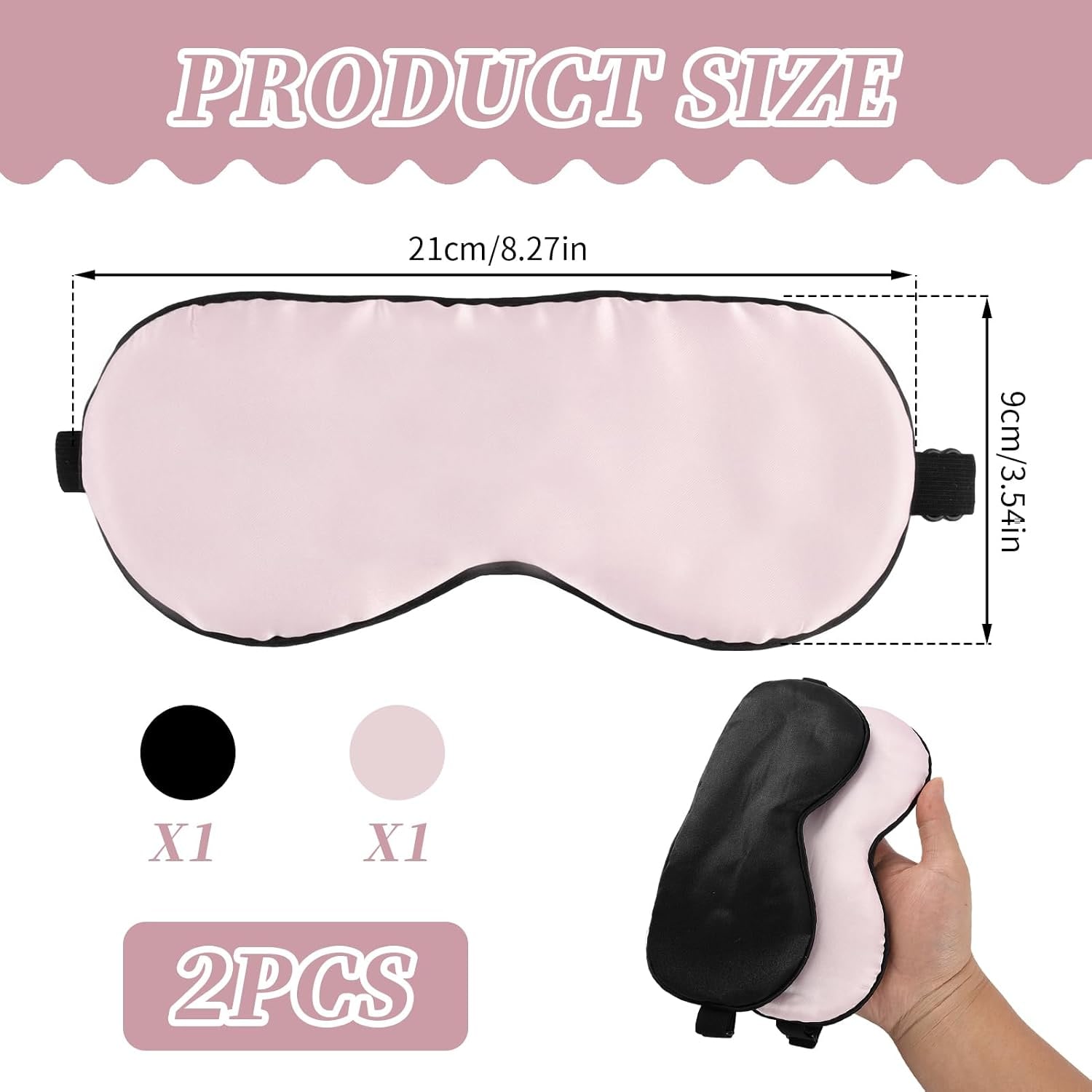
This set uses a wider face panel. That extra coverage pushes the edges of the fabric out to where the face is flatter, which means fewer gaps. It also spreads the pull of the elastic across more surface area. Pressure that would be concentrated in a narrow strip across the temples gets distributed instead, and that is the difference between a mask you forget about and one you are conscious of at three in the morning.
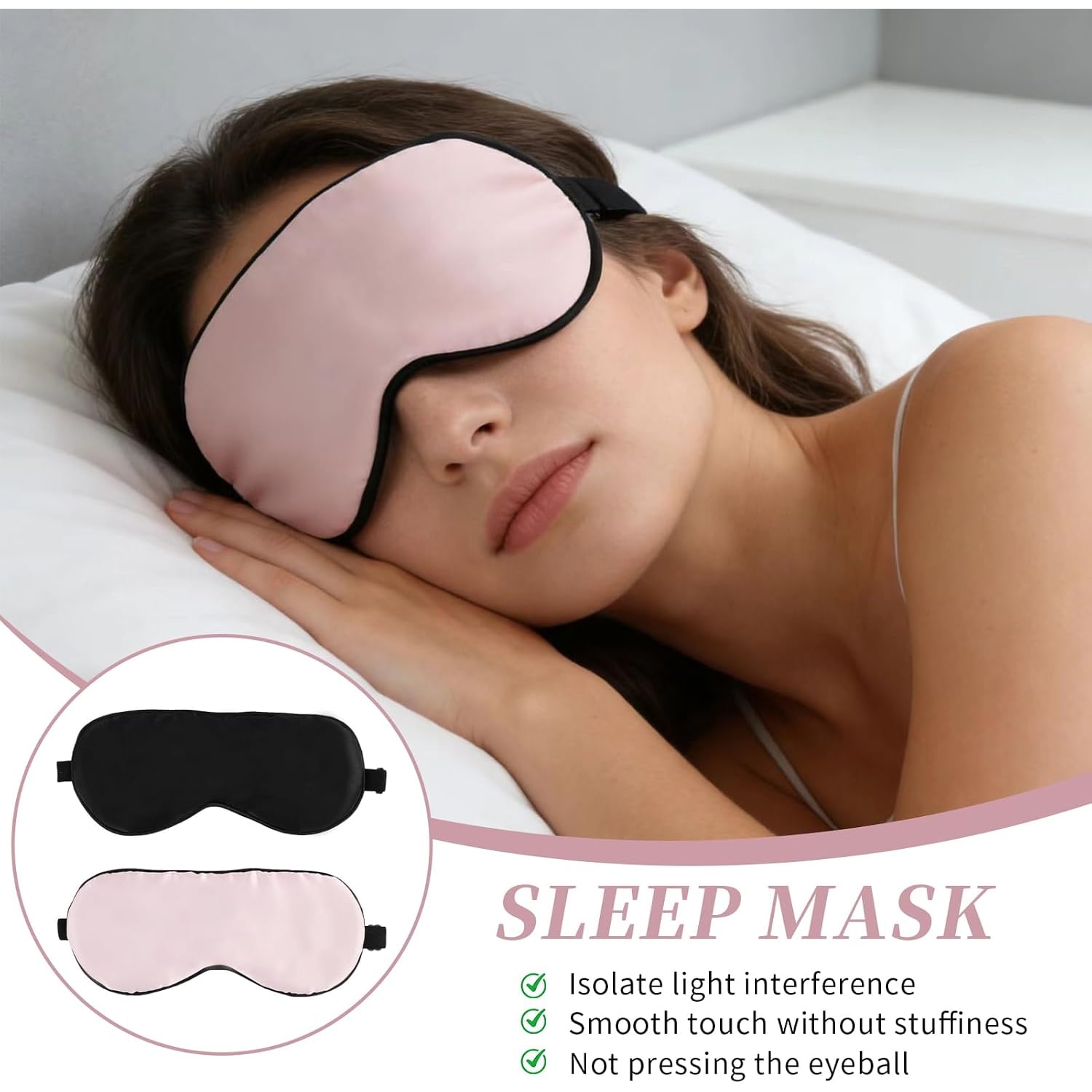
Width also helps side sleepers. When you lie on your side, half the mask presses into the pillow. A narrow mask shifts under that pressure and ends up sitting at an angle. A broader panel stays flatter and keeps its position better.
How the light blocking works
Here is something people get wrong about silk masks. Silk is a fine fabric, and a single layer of it, especially in a pale colour, lets a lot of light through. Hold a piece up to a window and you will see it clearly. A pale pink silk mask with nothing behind it will feel soft and look lovely and do very little in a bright room.
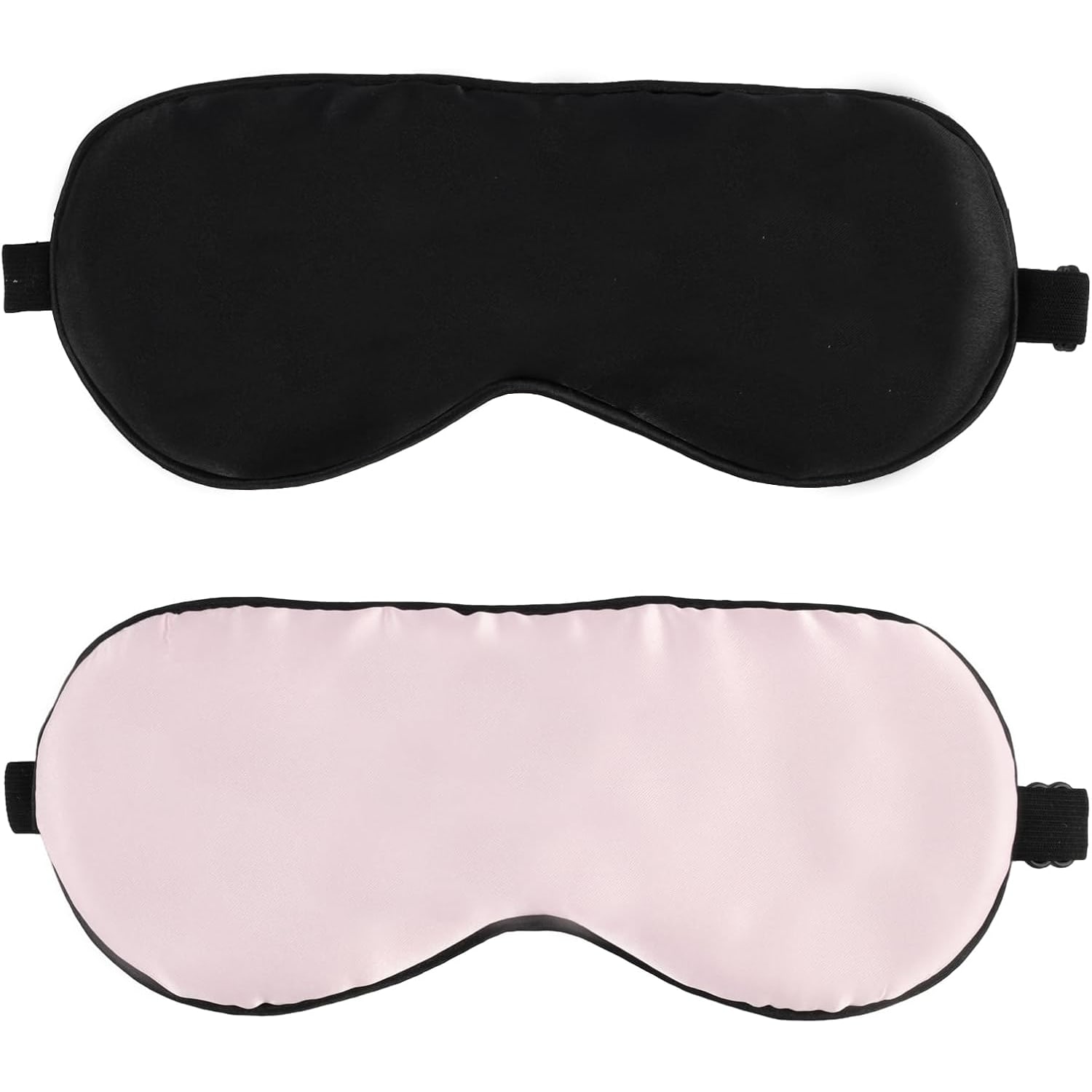
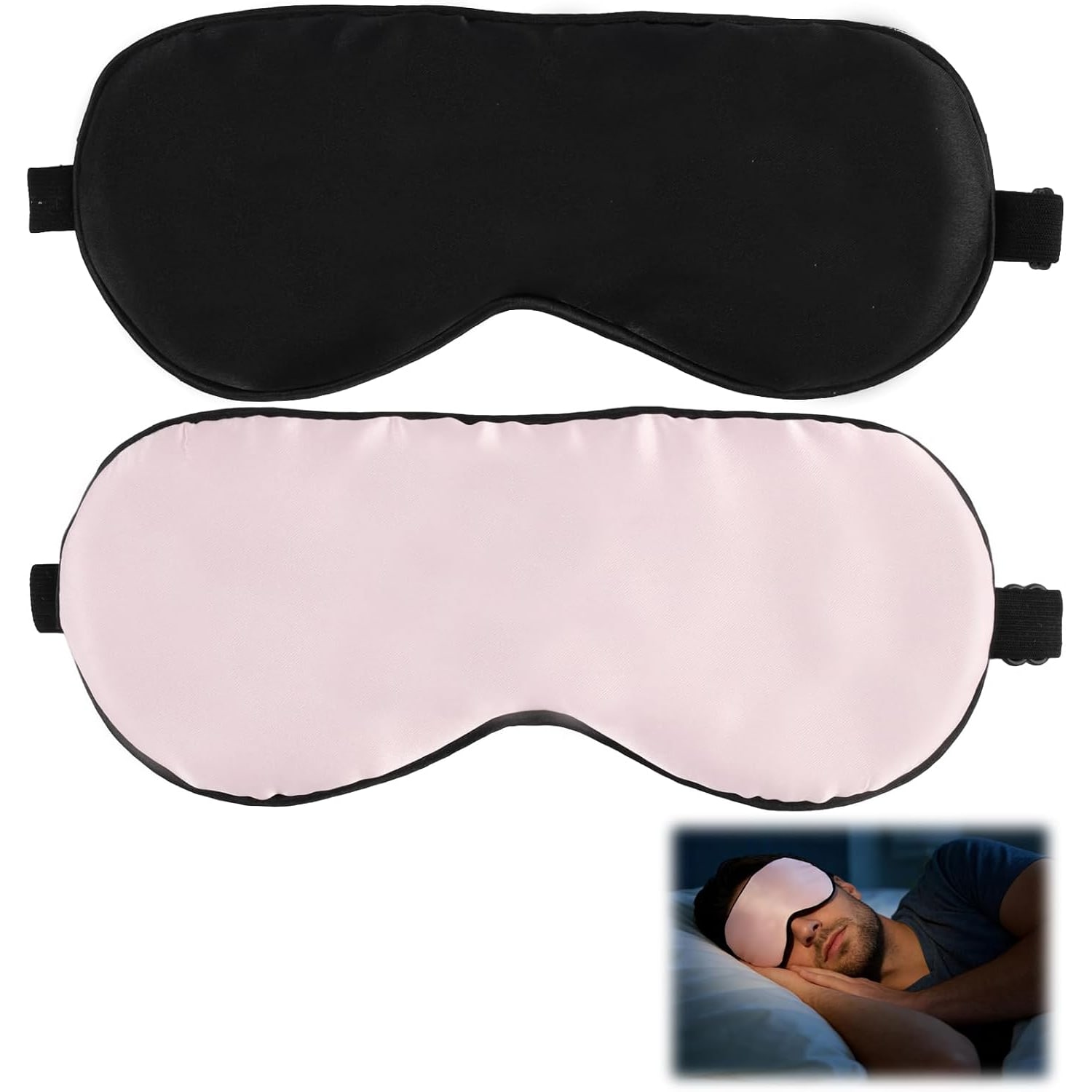
Both masks here have a black layer at the back. That layer sits between the silk and your eyes and absorbs the light that would otherwise filter through. So the peach pink mask gives you the colour on the outside and the darkness on the inside. It is the right way to build a pale silk mask, and it is worth checking for whenever you shop for one.
Be realistic about what any flat mask achieves. The fabric sits against the face, but faces are not flat. There will usually be a small amount of light coming in near the bridge of the nose, because that is where a flat edge meets a raised ridge. If you need absolute dark, pair a mask with a blackout blind. For most people, a wide mask with a dark backing takes a bright bedroom down to something easily dark enough to sleep in.
Getting the band right
The adjustable elastic band is there so you can tune the fit, and most people never bother. That is a mistake, because band tension is the single biggest factor in whether a mask is comfortable.
The rule is simple. Set the band to the loosest position where the mask still stays in place when you turn your head side to side with reasonable force. If it holds at that setting, stop there. Tighter does not block more light in any meaningful way, and it does cause marks on the temples and sometimes a dull ache by morning.
Give it a few nights. The elastic settles slightly with wear, so a setting that felt right on night one might need a small adjustment by night four. After that it tends to stay put.
Why two masks is the sensible buy
Silk wants a gentle wash and a slow, flat dry. That is not difficult, but it does take time. A mask washed in the evening will not be dry by bedtime. If you only own one, you either sleep without it or you put a damp one on, and neither is appealing.
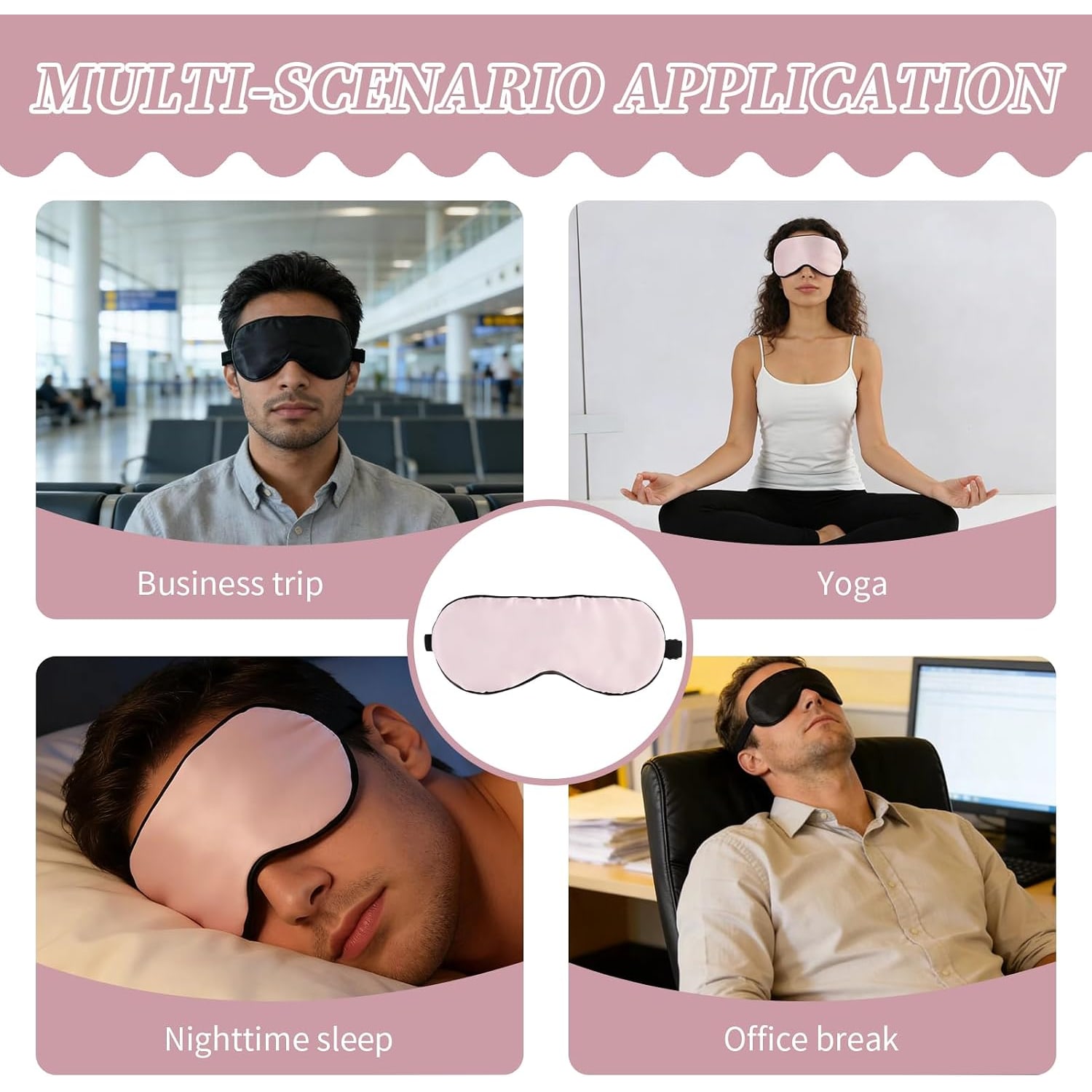
A pair solves that. One mask is in rotation, the other is clean and waiting. It also means you can leave one permanently in a travel bag. People who fly regularly tend to end up with a mask that lives in the suitcase and never comes out, which is exactly how it should be. Anyone hunting for the best two pack sleep mask is usually making that calculation already.
The colours give you a choice of mood. Black disappears, which suits most bedside tables and most people. Peach pink is the softer option and tends to be the one that gets picked up as a gift.
Looking after them
Silk is less fragile than its reputation suggests. It dislikes four things, and avoiding them covers nearly everything.
Heat is the first. Hot water and tumble dryers damage silk fibres and wreck elastic, so wash cool and dry flat. Bleach is the second, and that includes oxygen bleach found in some ordinary detergents, so use a detergent made for delicates. Hard wringing is the third, since twisting wet silk stretches and weakens it. Press the water out between a folded towel instead. Direct sunlight is the fourth, because prolonged sun fades dyes and weakens fibres, so dry in the shade or indoors.
Wash roughly once a week. If you use night creams or facial oils, make it more often, and let the product absorb for a few minutes before you put the mask on. That small habit keeps the silk cleaner and keeps you washing it less.
Who this suits, and who it does not
This set is a good fit if you want a soft, light mask that stays comfortable all night, if you sleep on your side, if you travel and want a spare, or if your bedroom gets more light than you would like. It also works as a straightforward gift, because two colours in one box covers more bases than a single mask would.
It is less suitable if you need a contoured mask with eye cavities that keep all fabric off the lashes, or if you want total blackout with no light at all at the nose. Those are specific needs and there are specific products for them. This is a flat silk mask, done properly, and it is honest about what that means.
The short version
Two masks, 100% mulberry silk, one black and one peach pink. Wider than a basic mask so the coverage is better and the pressure is spread out. A black layer behind the silk cuts the light that would otherwise pass through, including on the pale one. An adjustable band so it fits your head rather than an average one.
Set the band loose, wash it cool, dry it flat, and keep the spare in your bag. That is the whole method, and it is enough to get a lot more use out of a small thing than most people do.