
The complete guide
How to Choose a Silk Bonnet That Actually Stays On
The problem with waking up to flattened hair
Most people do not think about what happens to their hair for the eight hours they are asleep. Then they look in the mirror, see one side pressed flat, a crease where the pillow met the crown, and frizz where there was none the night before. If you spent time on a wash-day set or a blow-dry, that is a frustrating way to lose it.
The cause is mostly friction and movement. You turn over a few dozen times a night. Each turn drags hair against the pillow surface. Cotton, which is what most pillowcases are made of, has a textured fibre that catches. A bonnet solves it a different way to a silk pillowcase does, by containing the hair and giving it a smooth surface to sit against no matter which way you roll.
That is the whole idea behind a black single layer silk bonnet. It is a simple object. Getting the right one is mostly about three things, the fabric, the size and the fit mechanism.
What mulberry silk actually brings to it
Silk gets talked about in vague terms, so it is worth being plain. Mulberry silk is produced by silkworms fed on mulberry leaves, and the filaments they spin are long and consistent. That consistency is what makes the woven fabric so even and so smooth to the touch.
Smoothness is the practical bit. Hair moves across silk with less resistance than it does across cotton or a brushed synthetic. That is a property of the fibre, measurable and not controversial. It is not a promise about anything else, and anyone selling you a bonnet on the strength of dramatic claims is overreaching. The fabric is smooth, hair slides, that is the honest version.
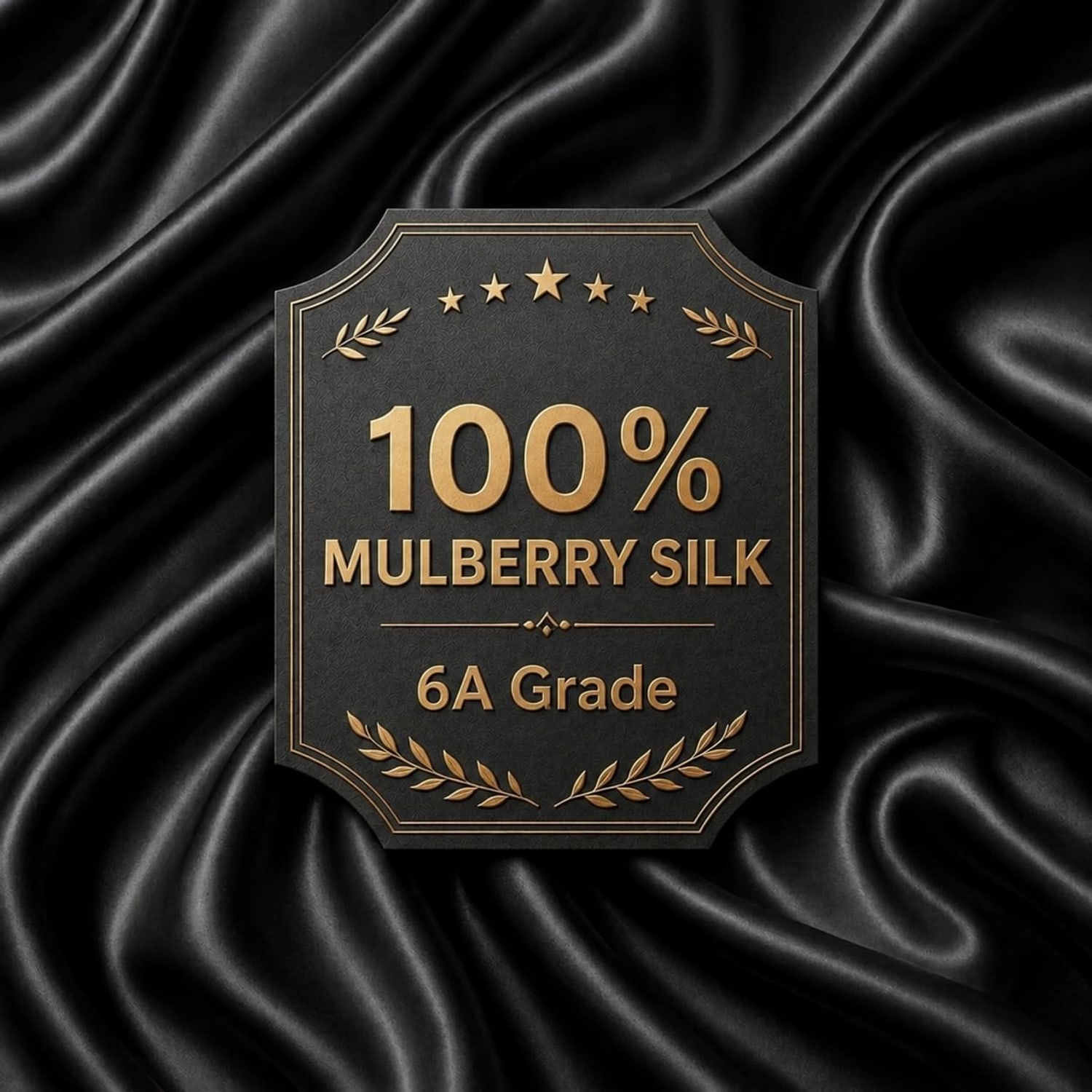
This bonnet is 100% mulberry silk. Not a blend, not a satin-finish polyester that looks similar in photos. Polyester satin is cheaper and has a sheen, but it behaves differently against the skin and in the wash, and it holds heat. If you have been looking for the best pure silk hair bonnet rather than a satin lookalike, the fibre content is the first thing to check on any listing.
Why single layer, and when you might want double
Bonnets come in two broad builds. A lined bonnet uses two layers of fabric, typically silk against the hair with a second layer outside. It feels more substantial, holds a rounded shape and keeps a bit more warmth in.
A single layer bonnet, which is what this is, uses one thin thickness. It is lighter, cooler, and it drapes rather than holding a shape. You notice it less on your head.
Which is right depends mostly on your bedroom and your tolerance for warmth. If you run hot at night, or you live somewhere that gets properly warm in summer, a double layer can feel like too much. If you like the reassuring weight of something more structured, you may prefer a lined one. Neither build is objectively better. People searching for the best lightweight silk bonnet usually land on single layer for exactly the reason above.
Size is the thing people get wrong
Here is the mistake most first-time buyers make. They buy a standard-sized bonnet, pack all their hair into it, and wonder why they still wake up with a flat crown and a crease.
A bonnet that is too small does not prevent compression, it causes it. All that hair gets pushed into a tight dome, then you lie on it for hours. The shape it comes out with is the shape the bonnet forced it into.
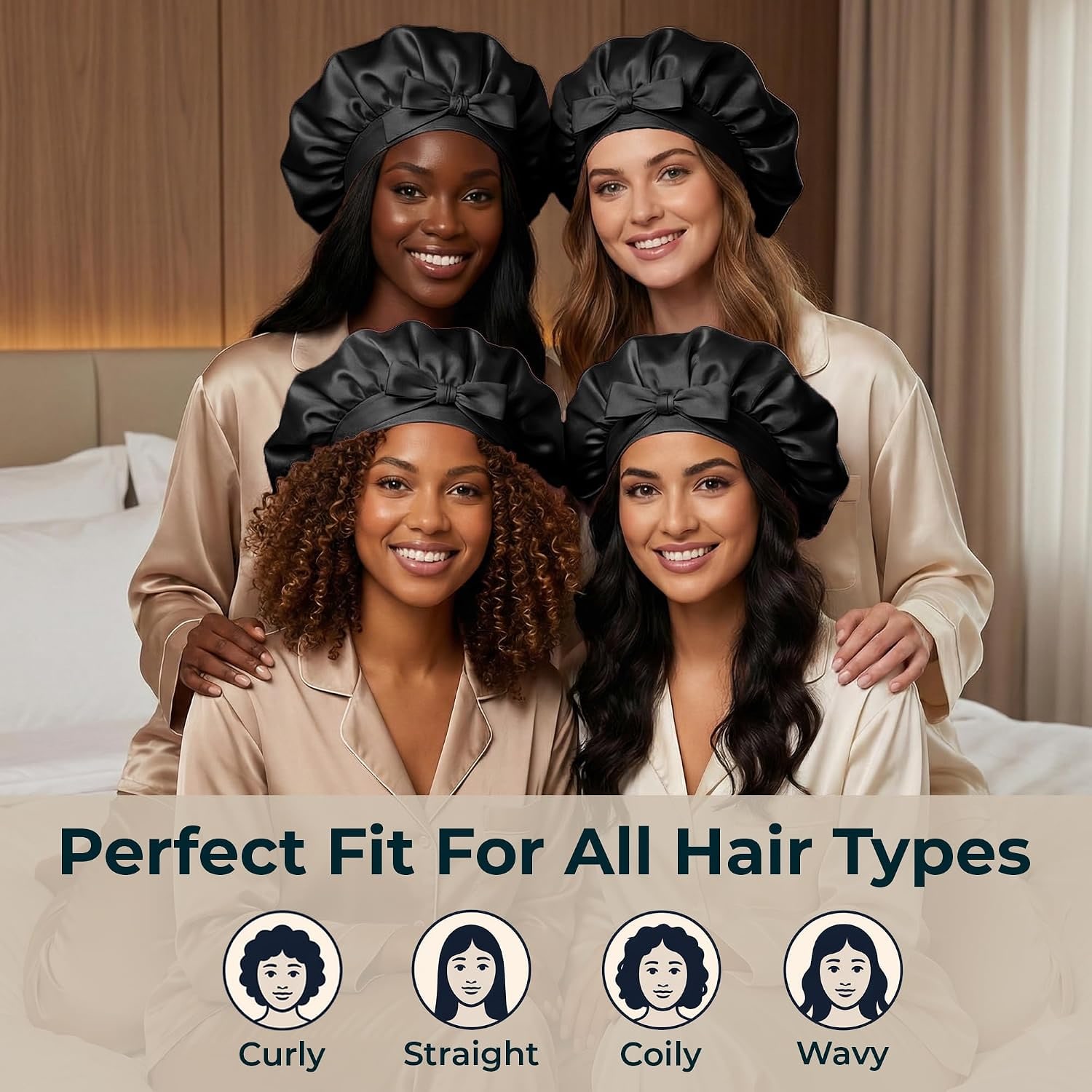
This one is cut extra large specifically so that does not happen. Hair sits loosely inside with room to spread. If you have long hair, dense hair, braids, twists or a set you want to protect, the extra volume is doing real work. Anyone hunting for the best extra large silk bonnet is usually hunting because they already learned this lesson with a small one.
If your hair is short or fine, the extra room is not a problem. You just take up the slack with the tie.
How the fit works
Two mechanisms, working together.
The elastic edge is the baseline hold. It keeps the opening gathered and sitting against your head. On its own, elastic is a compromise, because a loose elastic lets the bonnet travel and a tight one presses into your forehead by morning.
The tie is what fixes that compromise. You set the tension yourself. Pull it in if the bonnet feels loose, slacken it off if you feel pressure at the hairline. Most people find their setting on the second or third night and then leave it alone.
If you have tried a bonnet before and given up because it ended up on the pillow by 3am, the adjustable version is worth another go. An adjustable silk bonnet solves the single most common reason people abandon them.
Getting the most out of it
A few practical habits make a difference.
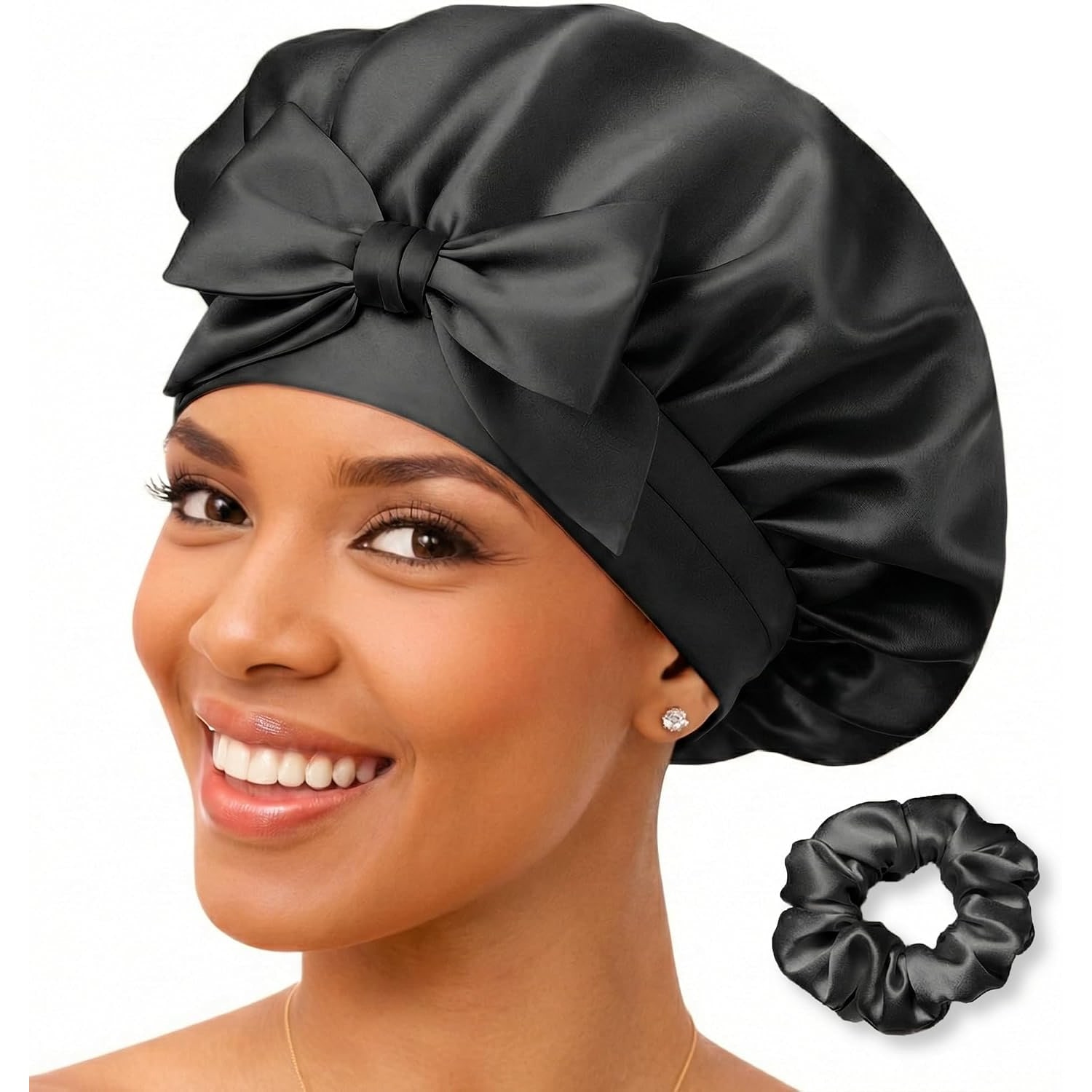
Gather your hair first. A loose gathering at the nape or on top, depending on your hair, makes the bonnet easier to put on and stops strands escaping around the edge. A matching scrunchie comes shown with this one, which is convenient since a hard elastic tie defeats the purpose a bit.
Do not twist your hair up tight before you cover it. Loose is the aim throughout.
Put the back on first, then pull it forward over your hairline. Trying to drop it straight down over the top usually means something ends up outside the edge.
If you use oils or leave-in products, expect to wash the bonnet more often. Product builds up on fabric, and silk feels less smooth when it is coated.
Care, which is simple but not optional
Hand wash only. Cool water, a mild detergent meant for delicates, a gentle squeeze rather than rubbing or wringing. Rinse until the water runs clear.
To dry, press the water out between a towel, reshape the bonnet and lay it flat. Keep it away from radiators, hot presses and direct sunlight. Heat is what does the damage to silk over time, both to the fibre and to the elastic in the edge.
No bleach, no tumble dryer, no hot iron. If you want to press out a crease, use the lowest setting with a cloth in between, though most creases drop out on their own as the bonnet dries flat.
Wash a dark colour on its own the first time or two, which is standard advice for any deep dye.
Treated that way, it will stay smooth and hold its colour through a long run of washes. Treated carelessly, silk will tell you about it quickly.
Who this suits
It is a good match if you have long or thick hair and have outgrown a standard bonnet. It suits warm sleepers who found a lined bonnet too much. It suits anyone who wants an adjustable fit rather than hoping a fixed elastic happens to match their head.
It is less ideal if you specifically want the structure and weight of a double layer, or if you are not prepared to hand wash. Those are both fair reasons to look elsewhere, and better to know up front.
The short version
A black single layer silk bonnet in 100% mulberry silk, cut extra large, held by an elastic edge plus a tie, with a matching scrunchie shown alongside. One thin layer keeps it light and cool. The roomy cut means hair is contained rather than compressed. The tie means you set the fit instead of accepting whatever the elastic decides.
Hand wash it, dry it flat, keep it out of the heat. That is the whole maintenance routine, and it is the only real demand the product makes of you.