
The complete guide
How To Choose A Contoured Silk Sleep Mask
The problem with most sleep masks
You buy one because the streetlight outside your bedroom is too bright, or your partner reads later than you do, or you have to sleep through the morning after a night shift. Then you discover the small irritations. The flat band presses your lashes flat. You can feel the fabric on your eyelids every time you try to open your eyes. The velcro at the back catches a few hairs. The elastic cuts a line across your forehead. By two in the morning the thing is somewhere down near your collarbone and the light is back.
A contoured mask fixes most of that by changing the geometry. Instead of a piece of cloth lying across your face, you get a moulded shell that bridges over the eye sockets and makes contact at the brow, the sides of the nose and the cheekbones. Your eyes sit in open air. That single change is what makes people who gave up on masks years ago try again.
How the contoured shape works
Picture the bridge of a pair of swimming goggles, softened and lined. The cups are shaped to follow the bone around your eye socket, which is the part of the face that does not move much when you sleep. The soft edges press lightly against that bone and form a seal. Inside, there is a pocket of air.
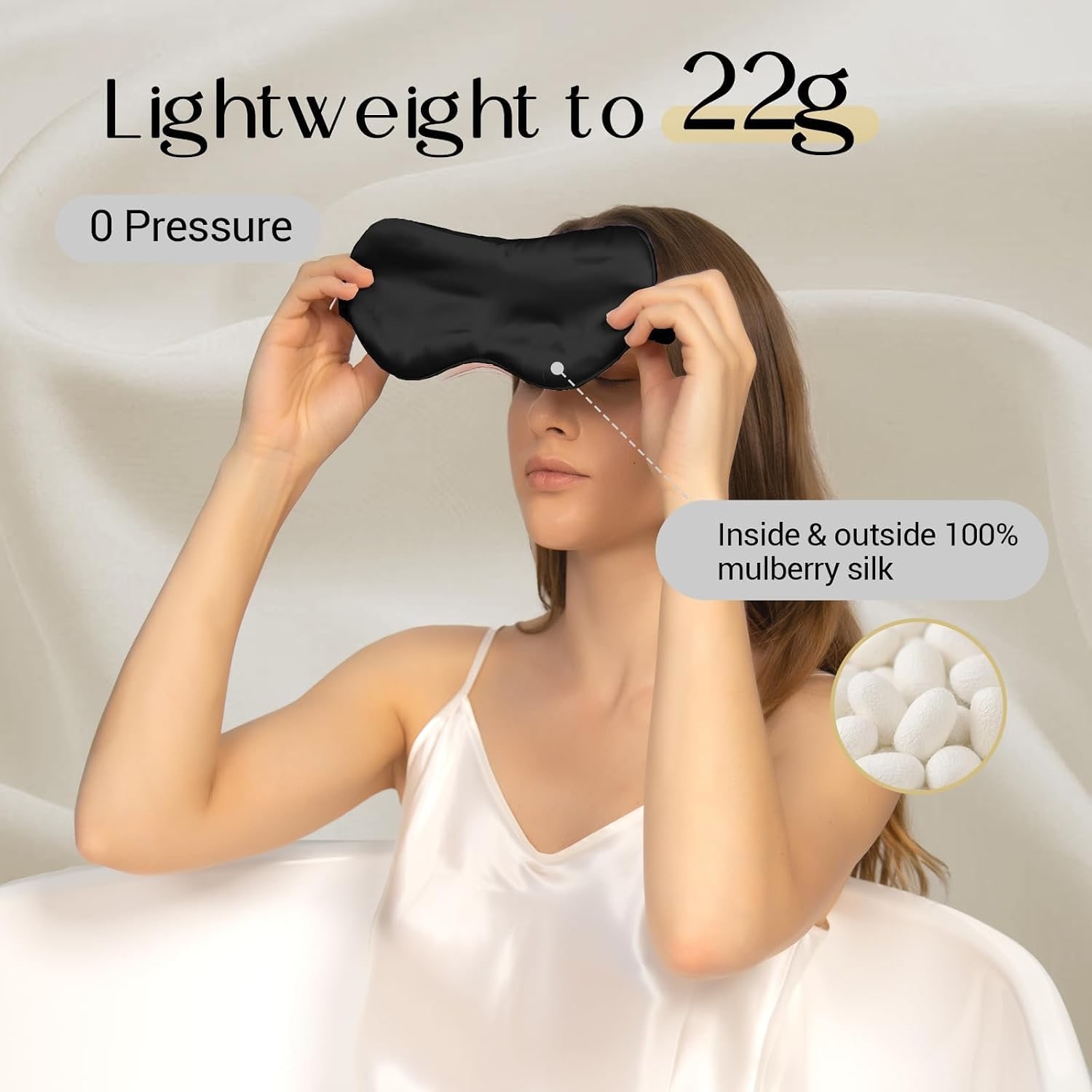
Two things follow from that. First, nothing touches your lids or lashes, so there is no pressure and no fluttering sensation when you drift between sleep stages. Second, the seal is generally tighter than a flat mask can manage, because a flat mask has to span the dip at your nose bridge and almost always leaves a small triangle of light down each side of the nose. A moulded shape can be built to follow that dip.
The trade-off is that a contoured mask is a specific shape and you are either a good match for it or you are not. Faces vary. A very narrow nose bridge, a deep-set brow or a particularly wide face can all change where the seal lands. Most people are fine. A few are not, and the only way to know is to try it on.
Why 22 momme silk
Momme is a weight unit for silk. It tells you how heavy a given area of the fabric is, and in practice it tells you how substantial the silk feels. Lightweight silk for scarves and linings often sits around 12 to 16 momme. Bedding and sleepwear silk usually starts around 19. At 22 you are into the denser end of what gets used next to the skin.
What you notice is the hand feel. A 22 momme silk has body. It drapes rather than clinging, it does not feel thin or slippery in a cheap way, and it holds its finish through more washes than a thin silk will. On a sleep mask, where the fabric is in contact with your face for seven or eight hours, that density is worth having.
The other reason people choose silk is friction. Silk fibres are smooth, so skin and hair slide across them with noticeably less drag than they do across cotton. Anyone who has woken up with a crease pressed into their cheek from a cotton pillowcase understands the difference immediately. The same logic is why a lot of people who already use a silk pillowcase go looking for the best mulberry silk eye mask to match.
Mulberry silk, in plain terms
Mulberry silk comes from silkworms fed on mulberry leaves in controlled conditions. Because the diet and the environment are consistent, the fibre comes out long, even and uniform in colour. That long fibre is what gives the finished fabric its smooth, continuous surface. Other silks exist, and some are lovely, but they tend to have shorter, less regular fibres and a more textured surface.
For a product that sits against the thin skin around your eyes, the even surface is the point. There is nothing nubbly or coarse to rub.
The pull-on strap question
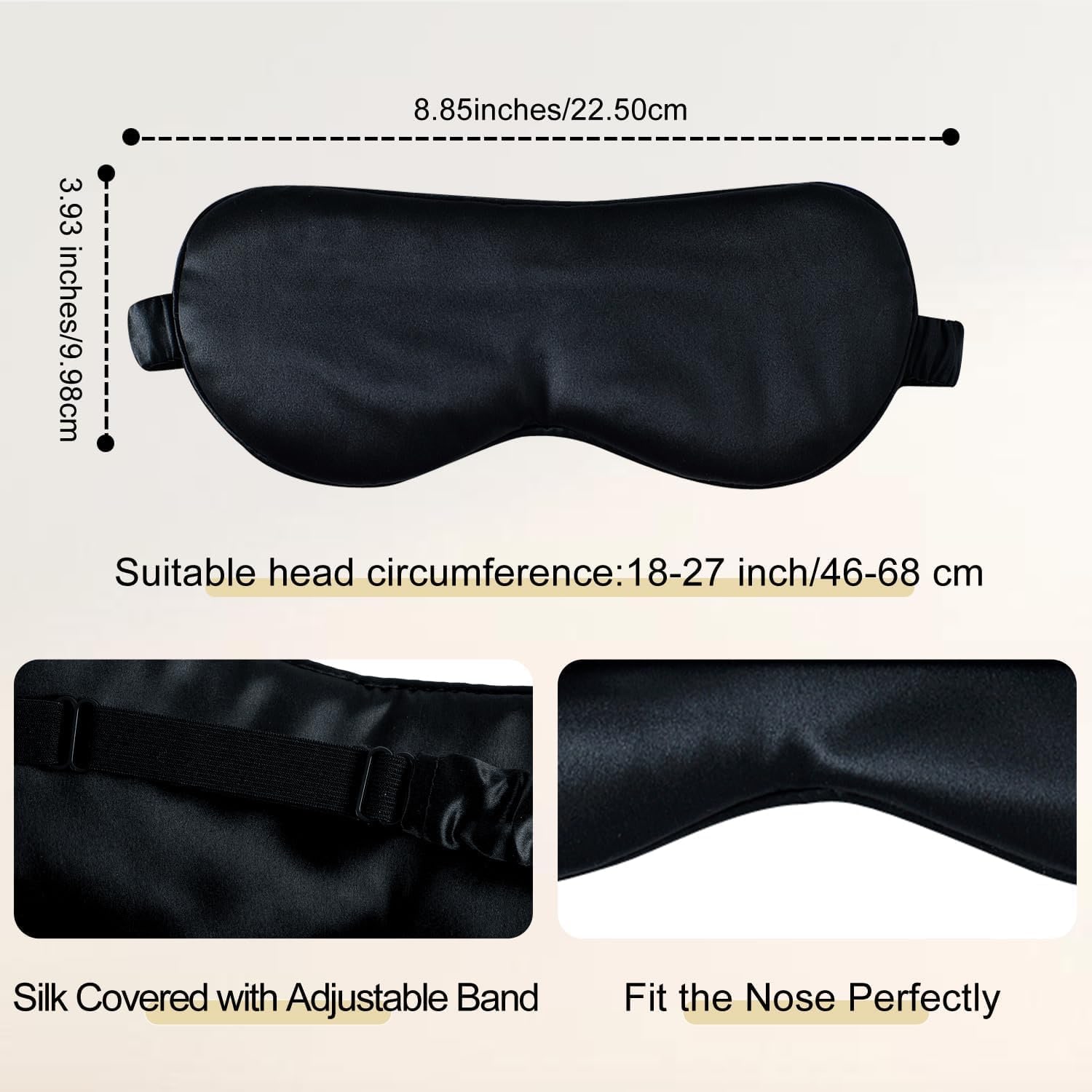
This mask has a silk-wrapped strap that goes over your head. No buckle, no slider, no velcro. Worth thinking about before you buy, because it is the one genuine fork in the road with sleep masks.
The case for pull-on: there is nothing hard anywhere on the strap, so when you roll onto your side there is no buckle pressing between your skull and the pillow. There is no velcro to grab your hair. It takes half a second to put on. For side sleepers in particular this is usually the better design.
The case against: you cannot adjust it. The tension is whatever the strap gives you. If you have an unusually large or small head, or you like a mask cinched down hard, an adjustable buckle gives you control that a pull-on cannot. Most people land fine in the middle, but if you know from experience that you need to tighten things, go looking for the best pull on sleep mask alternatives with a slider instead.
Who this suits
People who wear lash extensions, because nothing touches the lashes. People who sleep on their side, because of the light weight and the buckle-free strap. People who find flat masks claustrophobic, because the air pocket in the cups removes that pressed-against-the-face sensation entirely. Shift workers trying to sleep in daylight, because the seal around the eye socket blocks more than a flat band. And people who simply like silk and want the mask to match the pillowcase.
It is less of a fit if you want an adjustable strap, if you need something that folds completely flat for packing, or if you prefer the firm, heavy, weighted feel that some foam masks give.
Looking after it
Silk is not difficult, it just does not like heat or rough handling. Hand wash in cool water with a detergent made for delicates. Do not soak it, do not bleach it, and do not wring it out. Lay it on a towel and press the water out, reshape the cups with your fingers while it is still damp, then leave it flat to dry somewhere out of direct sun and away from a radiator.
How often you wash depends entirely on your routine. If you put on night cream or go to bed with make-up still on, you are transferring that onto the silk every night and it needs washing more often. If you go to bed with a clean face, every week or two is plenty, with a bit of airing in between.
Wash it on its own the first couple of times, as you would with any dark dyed fabric. And skip the tumble dryer. Heat shortens the life of silk and will not help a moulded shape hold its form.
A note on fit and expectations
No mask is a perfect light seal on every face. If someone promises total blackout for everyone, be sceptical. What a well-shaped contoured mask gives you is a big improvement over a flat band, with the comfort bonus of nothing touching your eyes. If your room is genuinely bright, pair the mask with a blackout blind and you will get further than either on its own.
Also give it a few nights. A mask is like a new pillow. The first night you are aware of it, and by the third you have stopped noticing it is there.
The short version
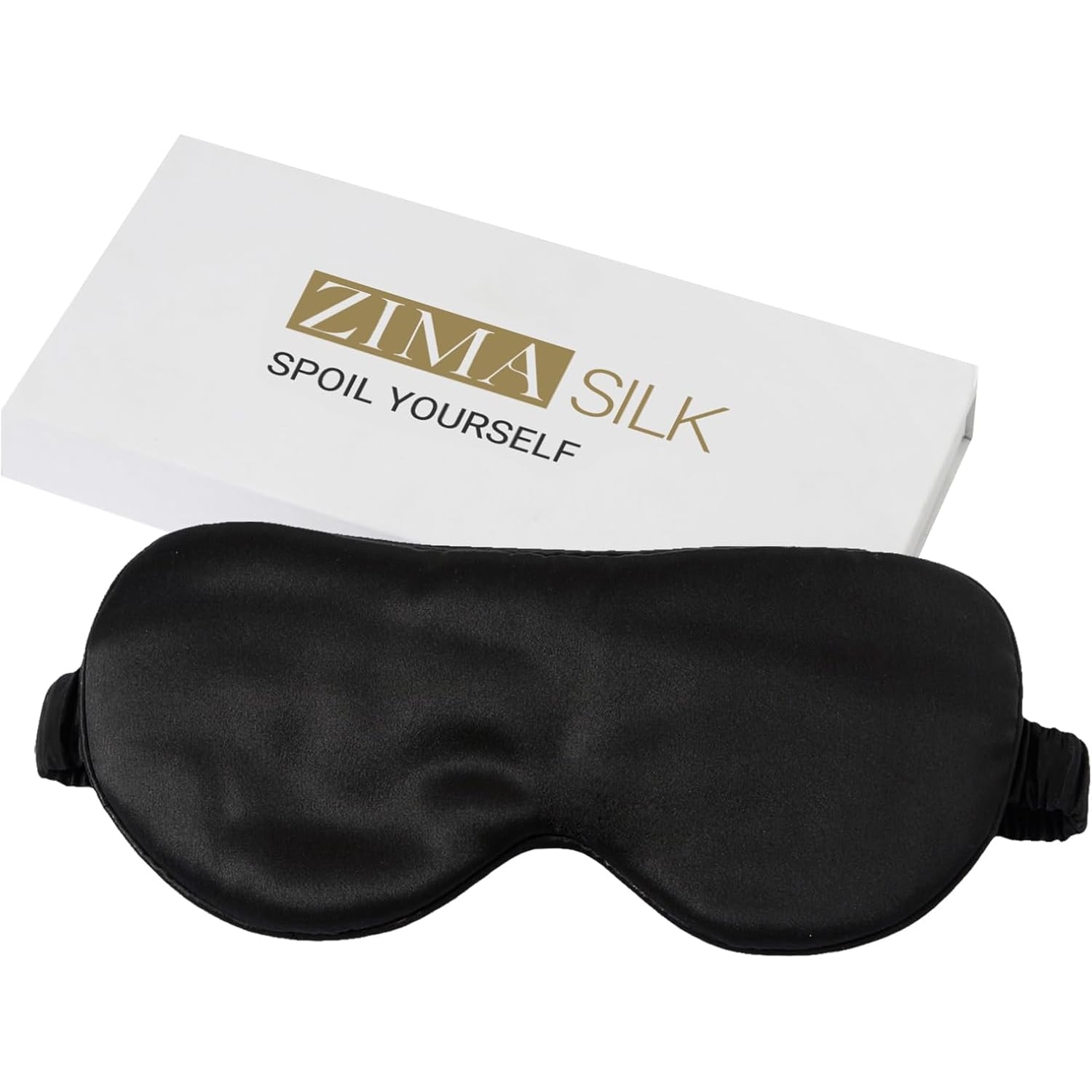
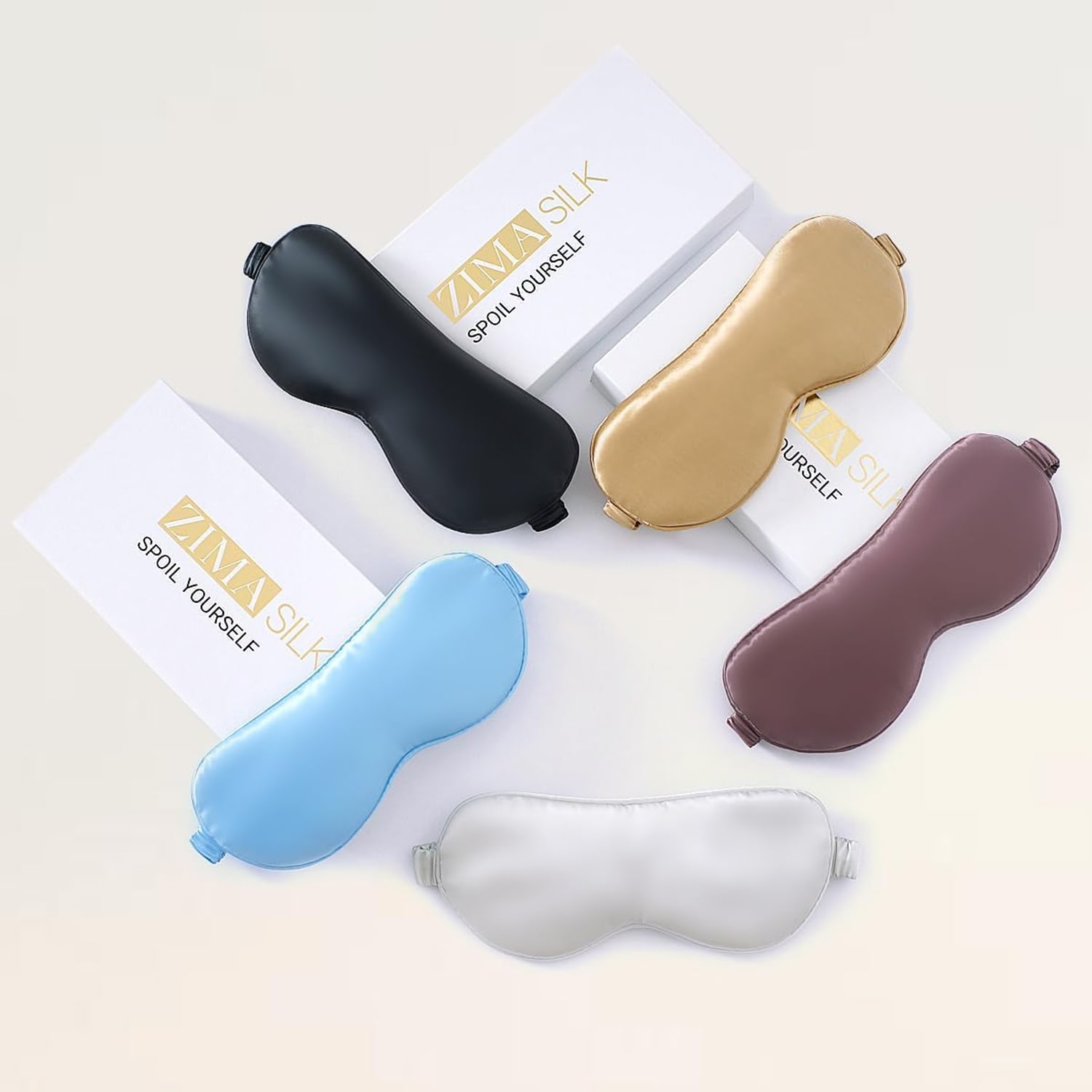
This is a black contoured sleep mask in 22 momme mulberry silk, with moulded cups that keep the fabric off your eyelids and a silk-wrapped strap that pulls on over your head. It is light, it has no buckle or velcro, and it arrives in a box so it works as a gift.
Choose it if you want darkness without pressure on your eyes, if you sleep on your side, or if you wear lash extensions. Choose something adjustable if you need to control the strap tension yourself. Hand wash it cool, dry it flat, and reshape the cups while they are damp. That is the whole job.