
The complete guide
How to Choose Silk Scrunchies and Hair Ties, a Practical Buyer's Guide
The small annoyance nobody plans for
Most people own too many hair ties and like almost none of them. The thin snapping ones live at the bottom of a bag. The cheap elastics with the metal crimp snag and bend. The towelling bands from a multipack feel rough and leave a crease you can see from across the room. You keep using them because a hair tie is a two-euro problem and nobody wants to think about it twice.
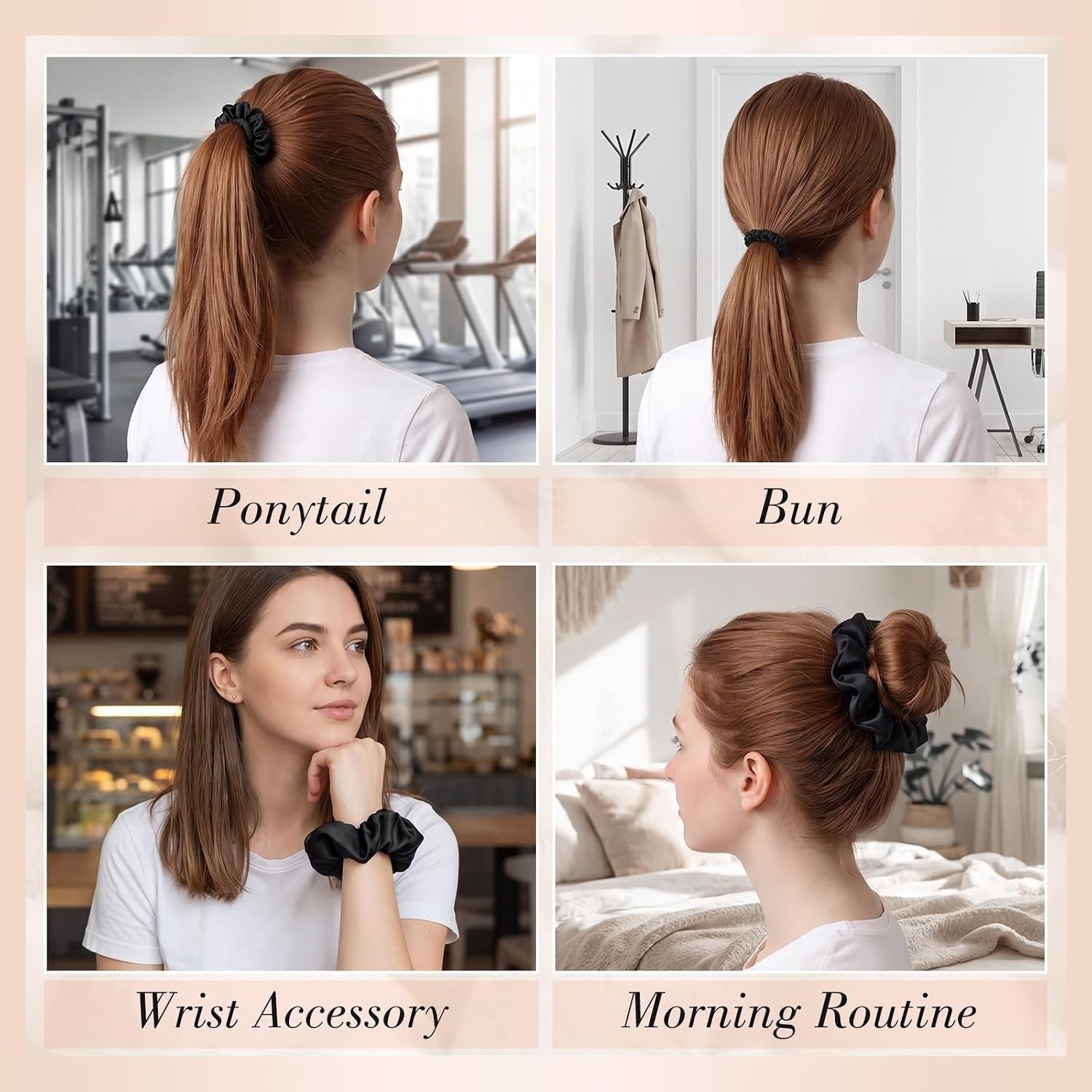
The problem is that your hair spends hours a day in contact with that band. Ponytail at the desk, bun at the gym, twist in the car, plait before bed. The surface of the tie matters more than the price tag suggests, and the texture is where cheap bands let you down. A rough fibre grips individual strands. A smooth one lets them slide.
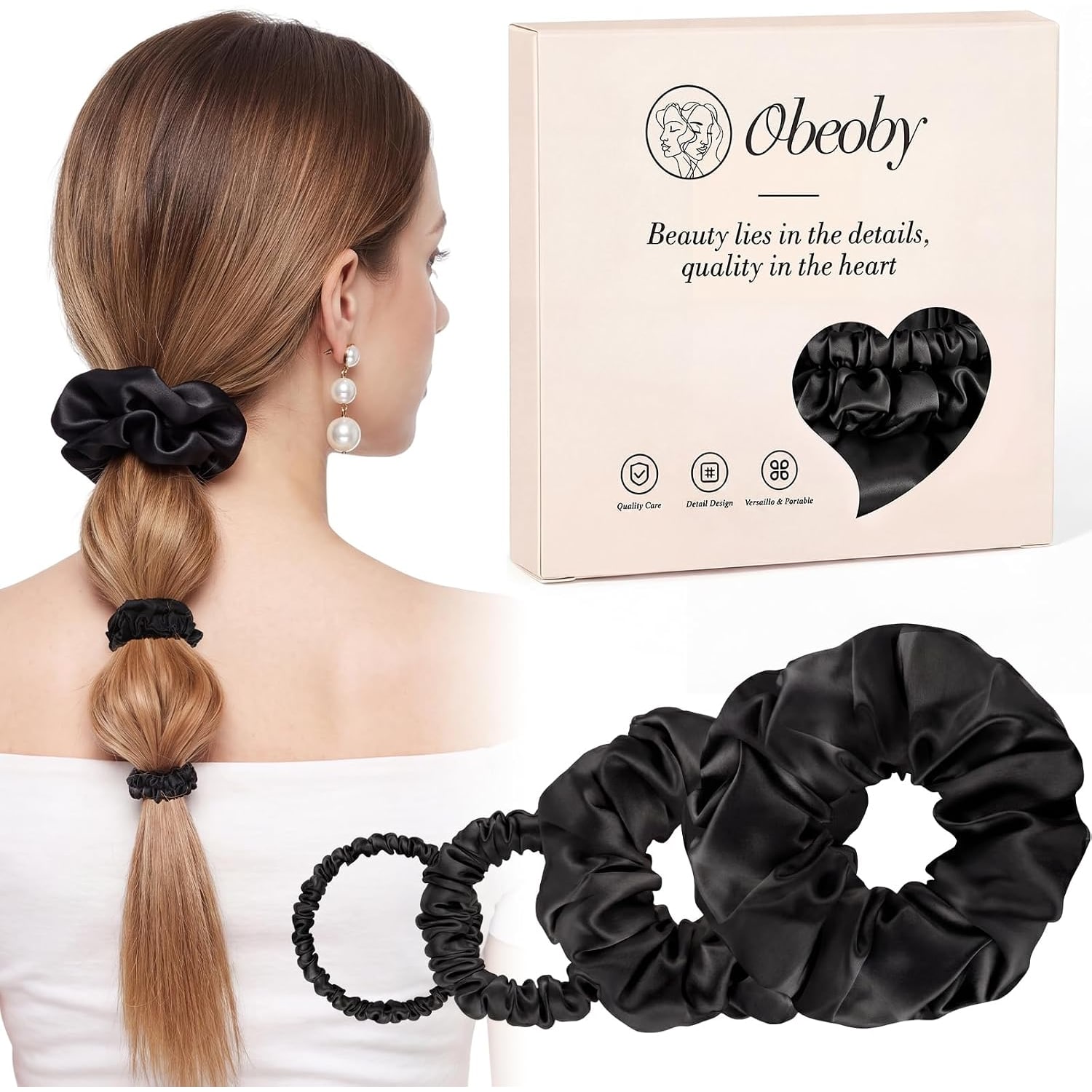
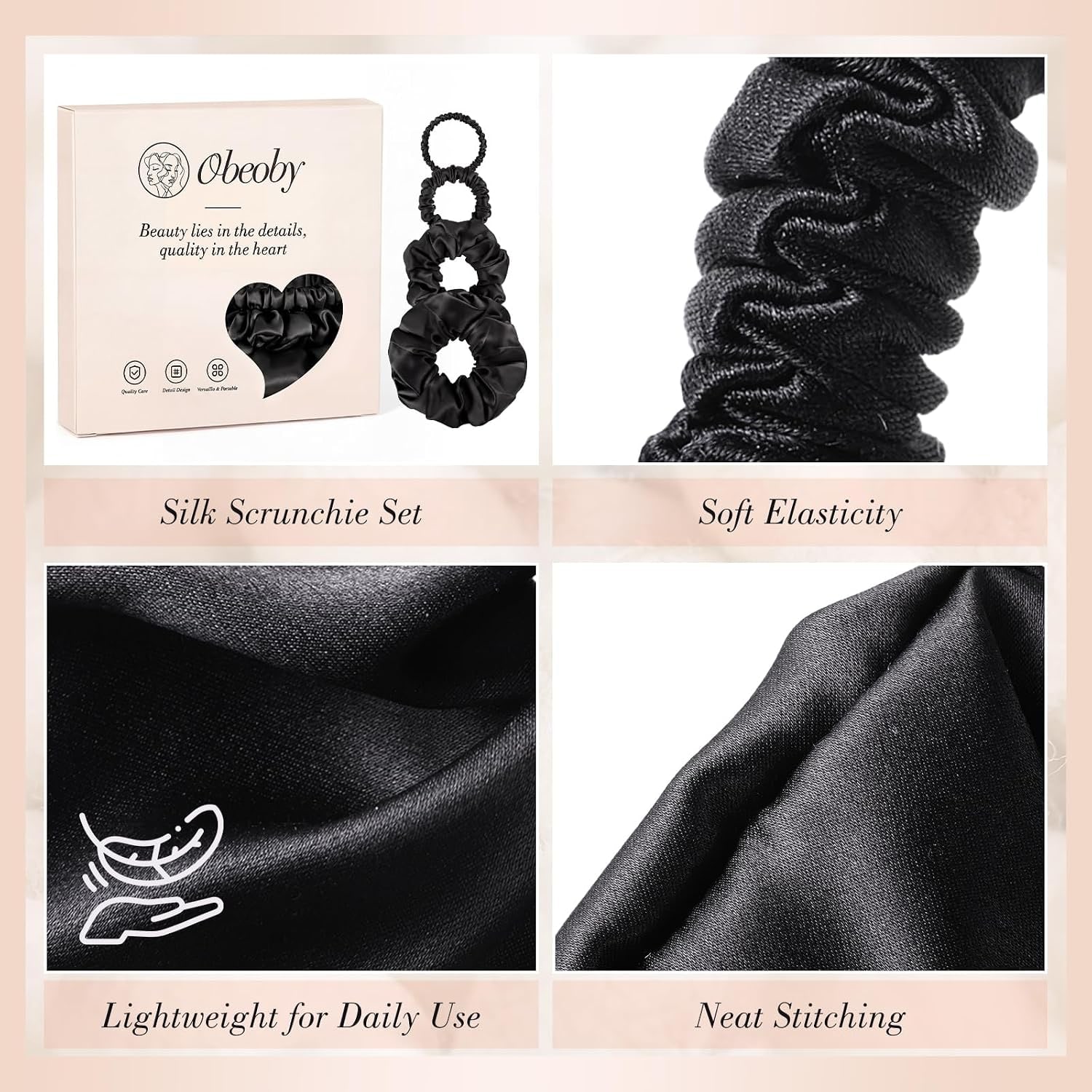
That is the whole idea behind this set. Four black hair ties, each wrapped in 100% mulberry silk fabric over an elastic core. The elastic does the holding. The silk handles the contact.
How a silk scrunchie actually works
Pull apart a basic scrunchie and you find a loop of elastic inside a tube of fabric. The fabric is what touches your hair and the elastic is what applies the pressure. That split matters, because it means you can change the feel of a hair tie completely without changing how well it holds.
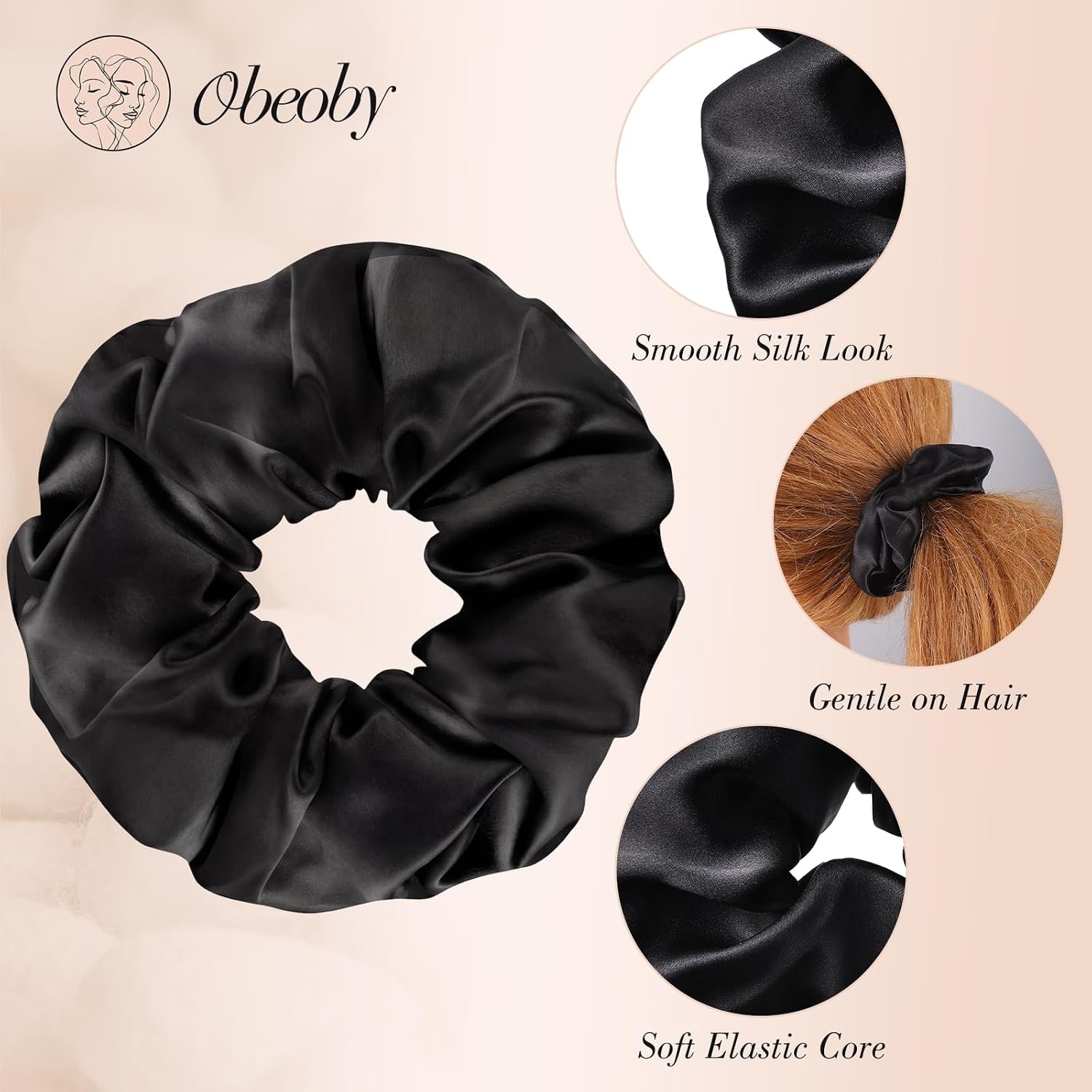
With a plain cotton or towelling cover, the surface is made up of short, fuzzy fibres standing slightly proud of the weave. Those fibres are what catch. With mulberry silk, the filaments are long and lie flat, so the finished fabric is smooth to the touch and hair moves across it with less drag. This is a property of the fibre itself, the same reason silk is used for pillowcases and scarves.
The hold still comes from the elastic. Silk does not grip, which is why a very heavy ponytail sometimes needs an extra turn. For most hair, a full scrunchie holds in one or two wraps and a skinny tie in two or three.
Why two widths is the useful part
A lot of scrunchie sets give you four identical bands in four colours. That looks nice in a photo and is less useful in real life, because the thing that changes which tie you want is not the colour, it is the width.
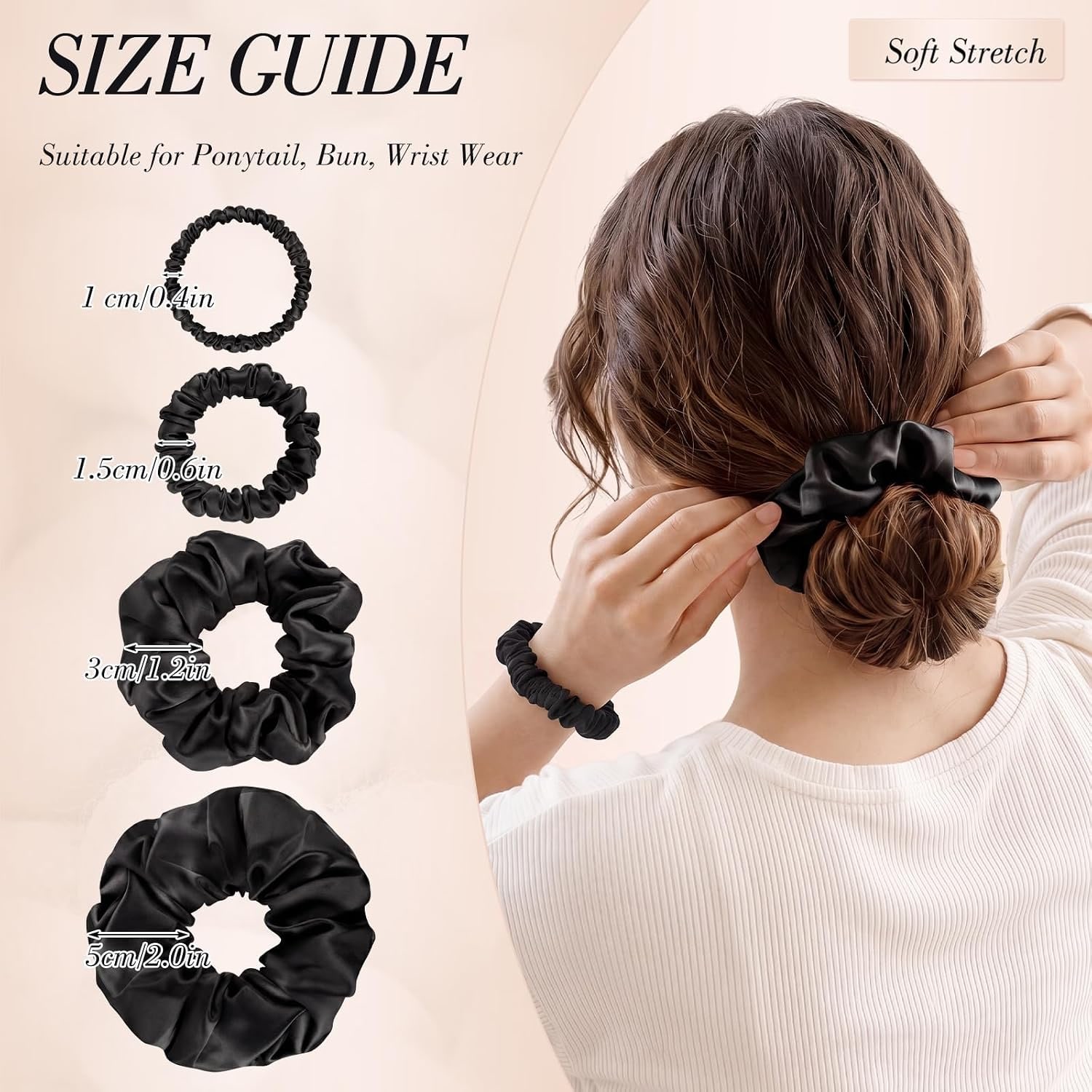
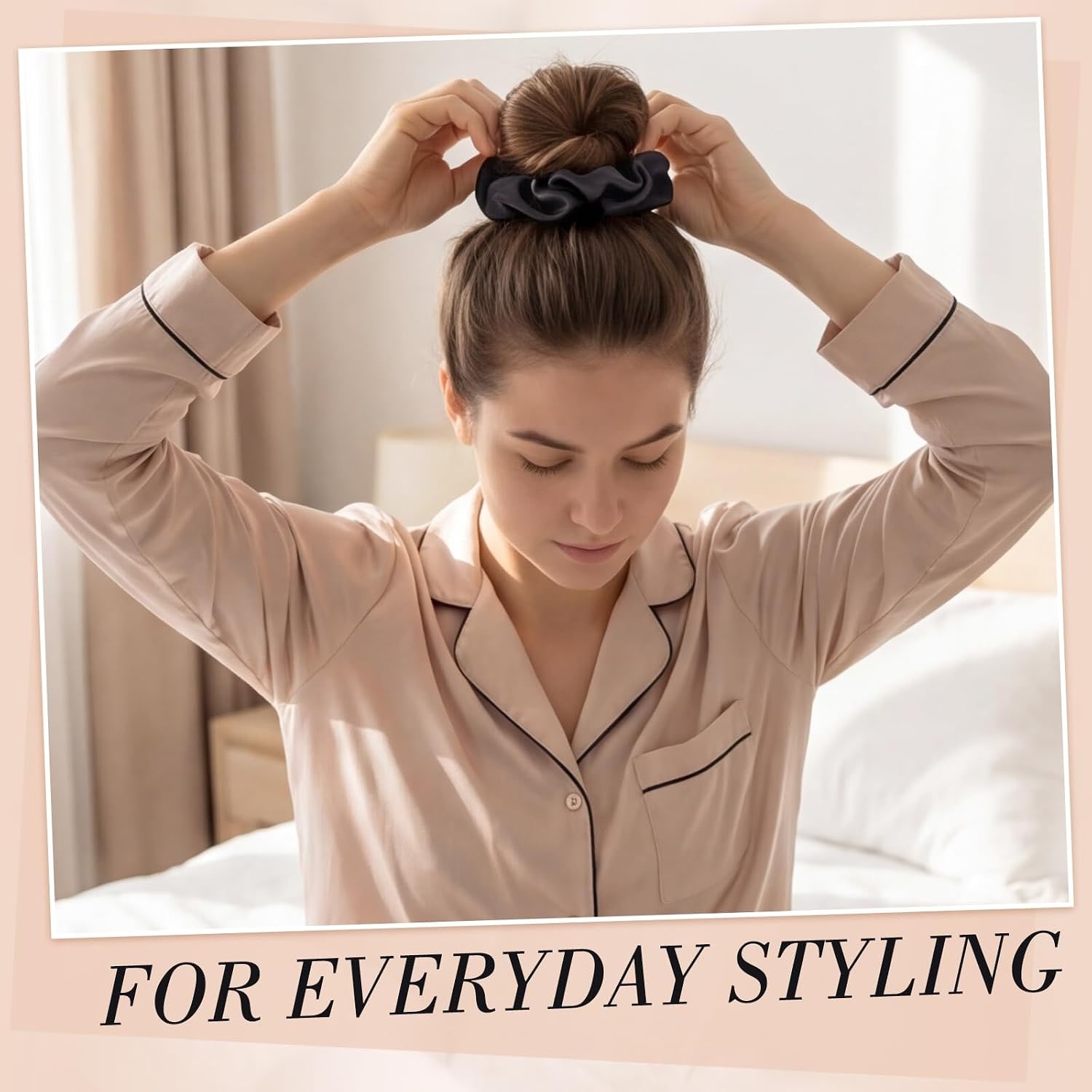
The full scrunchies here have more gathered silk around the band. That extra bulk spreads the pressure over a wider section of hair, which is why they sit comfortably on thick ponytails, loose buns and casual half-ups. They also look like a deliberate accessory rather than a bit of functional elastic, which is handy when you want a ponytail to look finished.
The skinny ties do the opposite job. They take up less room, so they vanish into a style. Use them for a tight topknot, the end of a plait, a small section tied back from the face, or anywhere a chunky band would look odd. They are the ones that work best under a hat or a helmet.
Between the two, this pack covers most of what a normal week asks of a hair tie. That is why the best silk scrunchie set for everyday use tends to be a mixed one rather than four of the same.
Who this set suits
If you wear your hair up most days, you will get use from all four. If you only tie it back occasionally, the skinny ties will probably see more action, and the scrunchies will come out for weekends and gym sessions.
Thick hair: lean on the full scrunchies. The wider band is more comfortable under weight, and it does not dig a line into the ponytail the way a thin elastic can.
Fine hair: the skinny ties are usually the pick, since you can wrap them several times and still keep the style neat. A full scrunchie worn loosely gives a soft look for hair worn half up.
Long hair: you will want both, one for the base of a plait and one for the end, or a scrunchie for a day bun and a skinny tie for an overnight twist.
Men with longer hair: black and plain, no pattern, nothing decorative. The skinny ties in particular are about as discreet as a hair tie gets.
Why black, and only black
Colour is the first thing people ask about and the easiest to get wrong. A pack of pastels looks lovely and then half of them never get worn because they clash with something. Black is the opposite problem. It goes with every hair colour, every outfit and every setting, from an office to a wedding to a Tuesday morning run.
It also hides a lot. Hair ties live a hard life in bags and pockets. Black marks less visibly than cream or blush, and it does not look tired after a few months the way a pale band can.
The practical upside of four in one shade is that they always match. If you lose one, which you will, the remaining three still work together for a double-wrapped bun or a plait with ties at both ends.
Looking after silk without making a project of it
Silk has a reputation for being fussy. In this format it really is not, because the pieces are small and dry fast.
Fill a basin with cool water and a little gentle detergent made for delicates. Swirl the ties through it, give them a minute, then rinse in clean cool water. Do not scrub and do not wring. Lay them in a towel, press down to take the water out, then reshape and leave them flat to dry somewhere out of direct sun and away from the radiator.
Three things to avoid. Heat, which is hard on both silk and elastic, so no tumble dryer and no hot iron. Long soaking, especially with dark colours. And over-stretching the silk while it is wet, which strains the casing around the elastic.
Wash them on their own the first couple of times, since dark dye can transfer. After that, a quick rinse whenever they have been through a sweaty workout is enough. Rotating four ties instead of wearing one favourite every day also stretches the life of the set, which is a quiet argument for buying a pack rather than a single tie.
What to check before you buy any silk hair tie
A few things separate a genuine silk tie from one that just looks like one in a listing photo.
First, the fibre content. Look for 100% mulberry silk rather than "silky", "satin finish" or "silk touch", which usually mean polyester. Satin is a weave, not a fibre, so a satin scrunchie can be made of anything.
Second, the construction. The elastic should sit inside the silk casing so that fabric, not rubber, touches your hair. If the elastic is visible at the join, it will catch.
Third, the widths on offer. One shape rarely covers every style, which is why mixed packs tend to earn their keep.
Fourth, how it is packaged if you are buying it as a present. A boxed set saves you a trip for wrapping paper. This one arrives boxed, which is why it ends up in a lot of birthday parcels and stockings.
The short version
Four black hair ties, all wrapped in 100% mulberry silk fabric over an elastic core, in two widths. The full scrunchies handle thick ponytails and soft buns. The skinny ties handle neat styles, plait ends and anything that needs to stay low profile. The elastic holds, the silk keeps the contact smooth, and black goes with everything you own.
Hand wash cool, press dry in a towel, keep them away from heat, and rotate them so no single tie takes all the wear. They come boxed, so if you are buying them for someone else, that part is already done.