
The complete guide
How to Choose and Wear a Plain Silk Square Scarf
The problem a plain square solves
Most wardrobes have a gap that is hard to name. You have the coat, the jumper, the shirt and the boots, and the whole thing still looks a bit unfinished. Jewellery does not always fix it. A patterned scarf often fixes it too hard, dragging attention to itself and fighting with whatever else you are wearing.
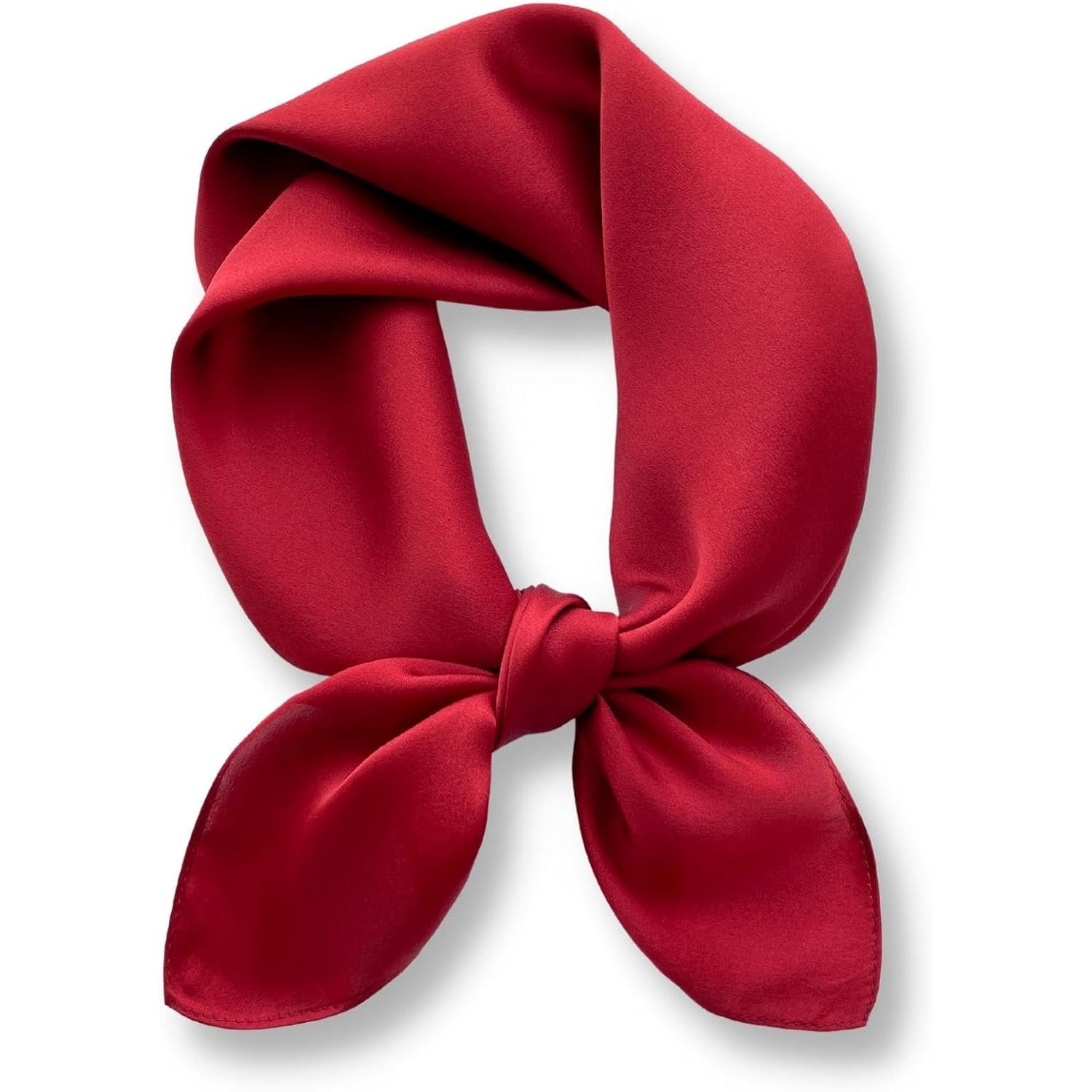
A plain silk square sits exactly in that gap. It adds colour at the point people look at first, just below the face, without introducing a pattern you then have to work around. Burgundy in particular is a quiet colour. It is dark enough to behave like a neutral and warm enough to lift a pale face on a grey morning.
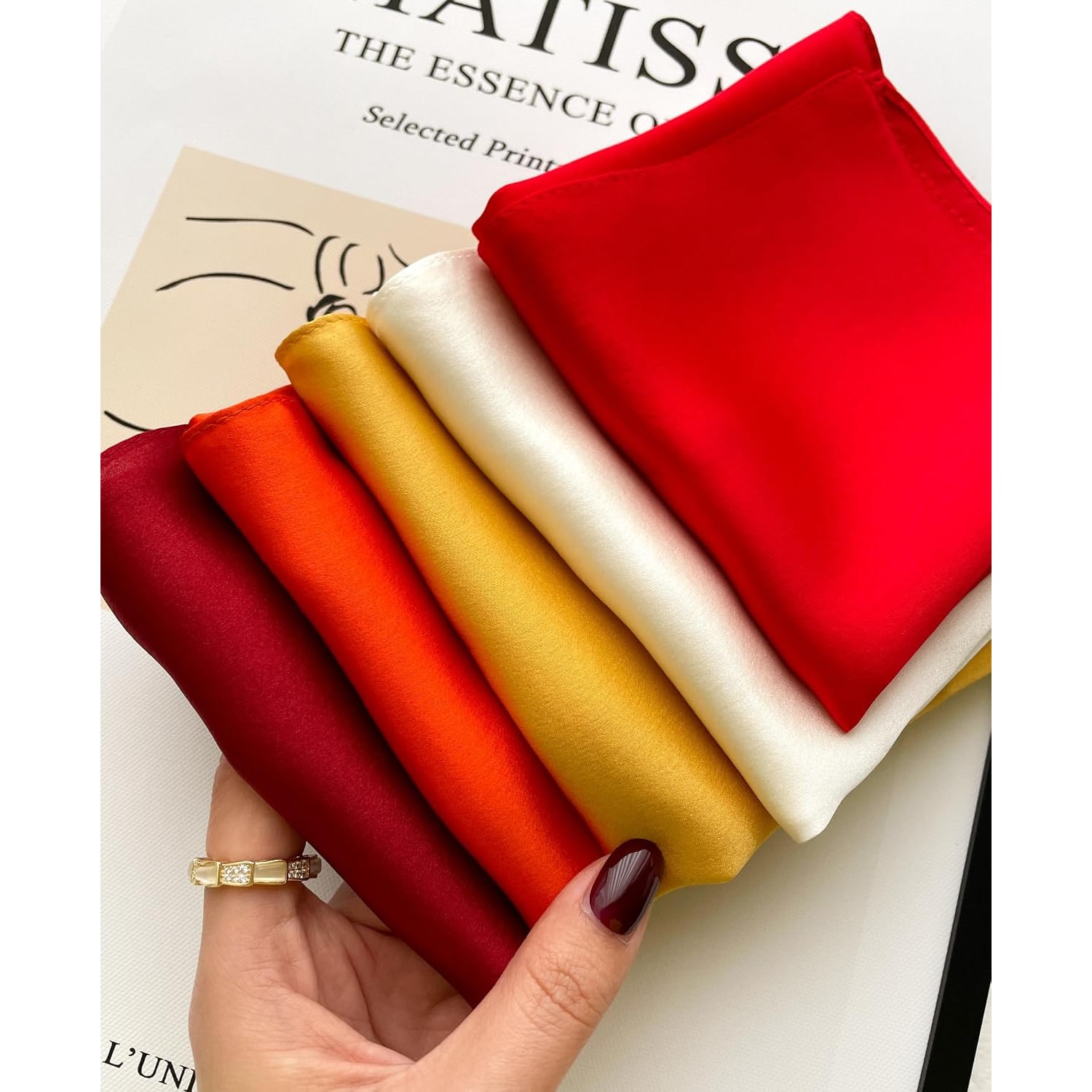
This one is 68 x 68 cm (27 x 27 inches) and the maker lists it as 100% mulberry silk. That is the whole specification, and for this kind of accessory that is genuinely most of what you need to know.
What mulberry silk actually means
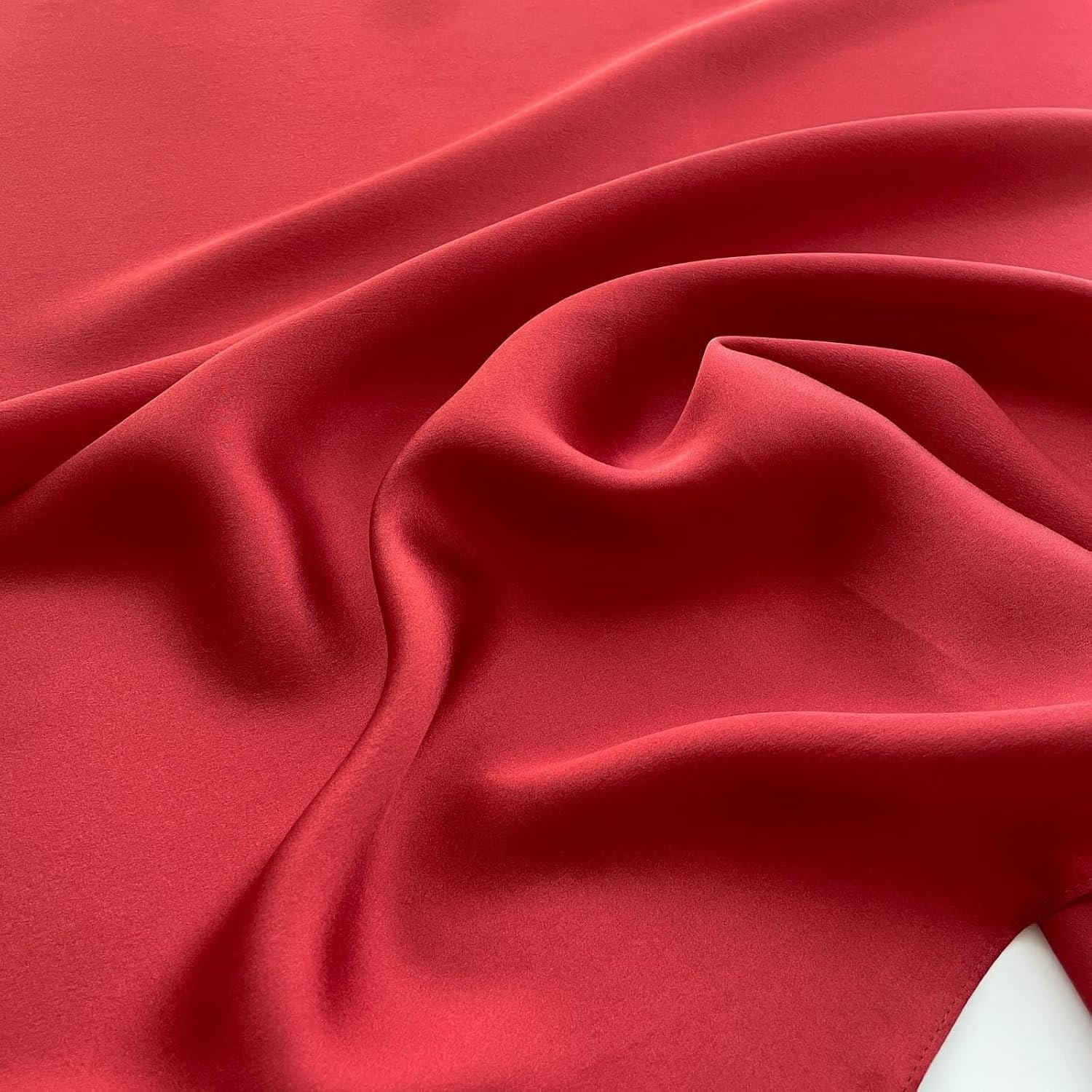
Silk comes from the cocoon of the silkworm. Mulberry silk is the kind reeled from worms fed on mulberry leaves, and the useful part is that the filaments are long and even. Long filaments mean fewer joins, which means a smoother surface.
You feel that smoothness in three ways. The fabric is cool when you first pick it up, because silk moves heat away from the skin quickly. It drapes in soft folds instead of standing up in stiff creases. And it slides. Hair and skin move over silk with noticeably less friction than they do over cotton or wool, which is why so many people who find wool scratchy at the neck get on fine with silk.
The maker has not given a momme weight or named the weave, so we are not going to invent either. What we can say is that this is a scarf-weight silk rather than a heavy upholstery silk, and it folds down very small.
Why 68 cm is a useful size
Square scarves come in roughly three tiers. Around 50 to 55 cm you get a small neckerchief, neat but limited to the neck and a ponytail tie. Around 90 cm you get the big classic square, lovely but with a lot of fabric to fold and tame. Between them, at 65 to 70 cm, sits the size most people end up wearing most.
At 68 x 68 cm you can do nearly everything. Fold it corner to corner and you have a band long enough for a proper knot at the back of the neck, not a strangled one. Open it out and it covers the head. Fold it into a thin strip and it wraps a bag handle twice with tails left over. Roll it and it ties around a wrist or threads through belt loops.
It also behaves well under a coat. A 90 cm square can bunch up at the collar and make your neck look shorter. A 68 cm square tucks flat.
Who this suits
If you wear a lot of plain clothes, this is for you. Solid jumpers, white shirts, dark coats and denim all benefit from one small piece of colour, and a plain square gives you that without committing you to a look.
If you are new to scarves, start here rather than with a print. Prints have a personality, and it takes a while to learn which ones you actually enjoy wearing. A solid colour has no opinion. You put it on, it works, you stop thinking about it.
If you already own a few patterned squares, a plain one fills the days when the pattern would be too much. Meetings, travel, funerals, anything where you want to look pulled together and anonymous at once.
If you are buying a gift and do not know the person's taste well, a plain silk square is the safest thing in the category. There is no size to get wrong and no motif to misjudge.
How to choose your colour
Burgundy is one of the more forgiving shades because it is dark. Dark colours sit back. They flatter most skin tones and they hide the inevitable smudge of foundation along the fold better than cream or pale blue ever will.
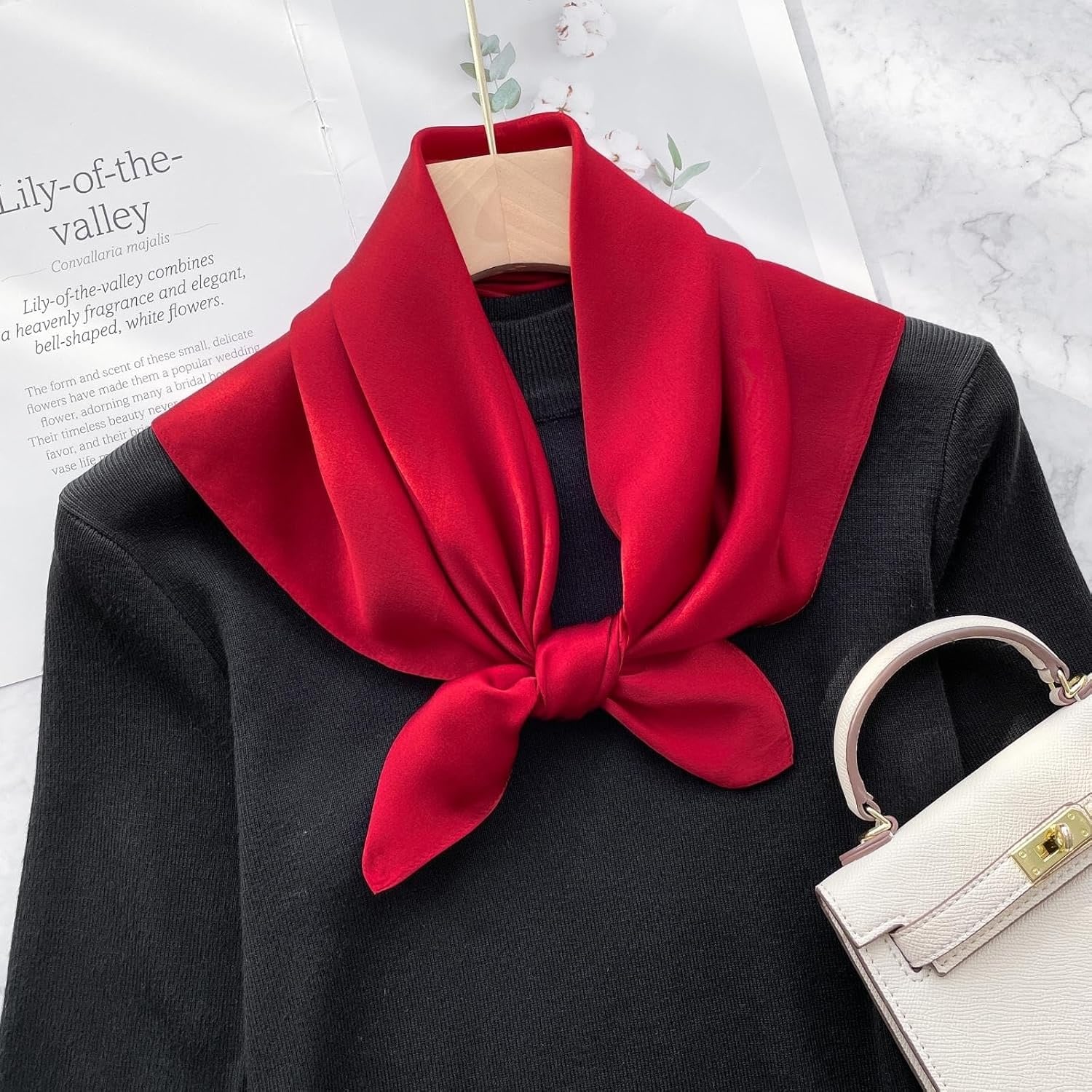
Think about what is already in your coats. If your outerwear is navy, black or grey, burgundy adds the warmth those colours lack. If your coat is camel or tan, burgundy deepens it and stops the whole outfit looking washed out. If you wear a lot of brown, burgundy is a closer cousin and will read as tonal rather than contrasting, which is a nice effect if that is what you want.
The one combination worth testing in a mirror is burgundy against bright red or orange. They can clash in a way that is hard to predict from a photo.
Four ways to wear it
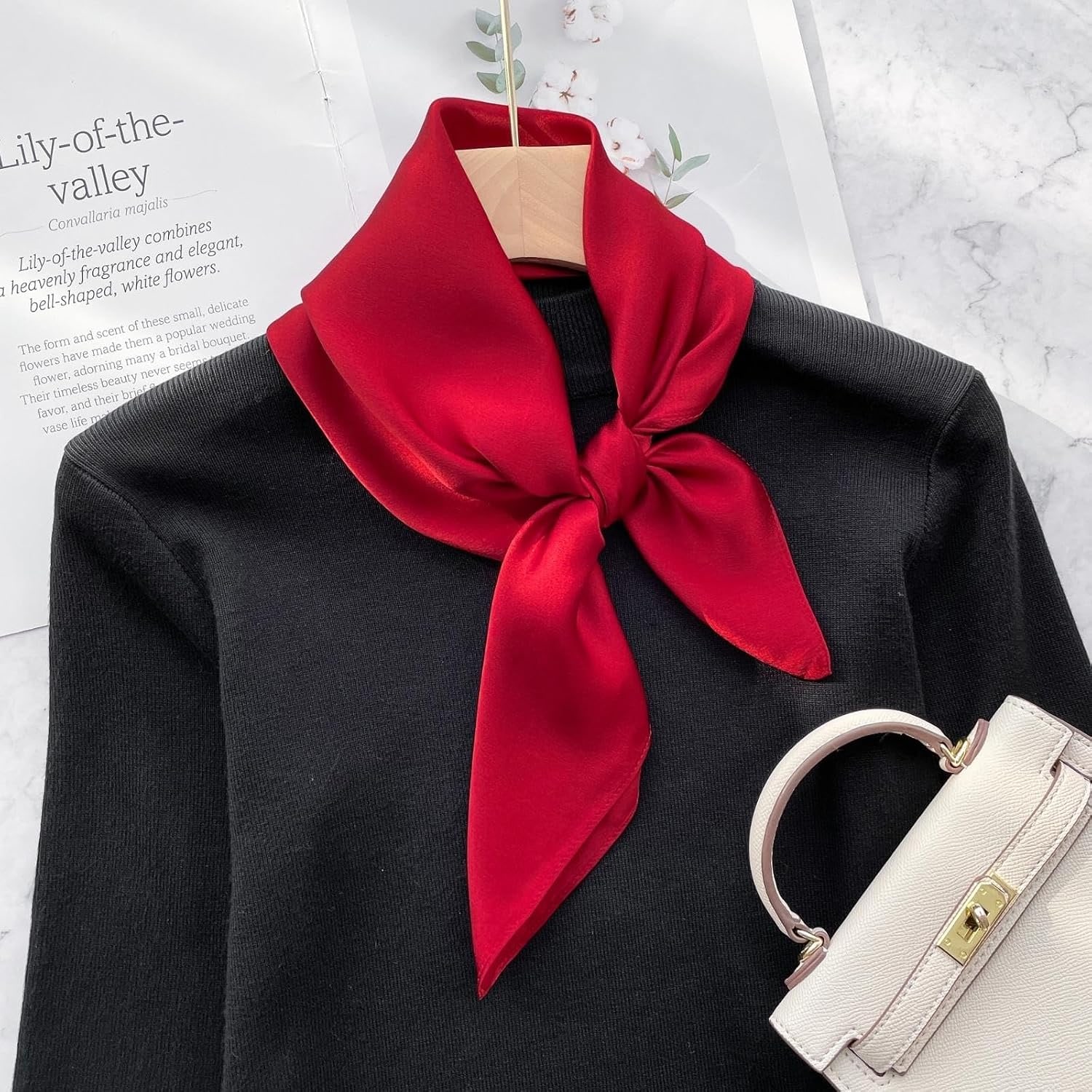
The cowboy fold is the easiest. Fold corner to corner into a triangle, place the long edge across the front of the throat with the point facing down, take the two ends behind the neck, cross them and bring them back to the front. Tie a small knot off to one side and push the point under your collar or leave it showing.
The flat band works under an open-collar shirt. Fold the square into a long strip about five centimetres wide, lay it around the neck, knot it loosely at the front and slide the knot to one side. This is the one that reads as office-appropriate.
As a head scarf, fold into a triangle, lay it over the crown with the long edge at the hairline, and tie either under the chin or at the nape. Tying at the nape leaves the ears out and suits a windy walk.
On a bag, fold the square down to a narrow strip, loop it once around the base of the handle, knot it and let the tails hang. Keep the tails short enough that they do not drag.
Caring for it
Silk is less fragile than its reputation suggests, but it does dislike three things. Heat, alcohol and friction.
Hand wash in cool water with a drop of gentle detergent. Swirl the scarf through the water rather than scrubbing it, because rubbing silk against itself is what dulls the surface. Rinse until the water is clear. Do not wring it. Lay it on a clean towel, roll the towel up and press to take the water out, then unroll and dry the scarf flat or over a line indoors.
Keep it out of direct sun while drying. Strong light is what fades a deep dye like burgundy, and once it has gone patchy there is no fixing it. The same goes for drying it on a radiator.
If you want to press it, use a low setting on the reverse side while the silk is still a little damp. Perfume and hairspray should go on first and be fully dry before the scarf goes near your neck. The alcohol in them can leave a mark.
Store it folded loosely in a drawer or rolled. Hooks and hangers with rough edges catch threads.
Things to check before you buy
Measure against something you own. Lay out a tea towel or a cushion cover and look at 68 cm in real space, because square sizes are hard to judge from a photo.
Decide whether you want a finishing accessory or a warm one. This is the former. If you are buying something to keep a cold neck warm in January, a long wool scarf will do that job and this will not.
Be aware of what the maker has not stated. Momme weight, weave, hem type, net weight and country of origin are not given, so if any of those are deal-breakers for you, factor that in.
The short version
A 68 x 68 cm square in 100% mulberry silk, plain burgundy, hand wash. It knots at the neck, ties over the hair, covers the head and wraps a bag handle. The colour is dark enough to behave like a neutral and warm enough to lift a plain outfit. It folds to nothing and lives in a pocket. Hand wash it in cool water, dry it out of the sun, and it will keep looking like this for years.
Delivery is tracked from European warehouses in 5 to 8 working days, free across Ireland on orders over 120 euro and 15 euro under that. You have 14 days from delivery to cancel under the Consumer Rights Act 2022.