
The complete guide
How to Choose a Silk Sleep Mask That You Will Actually Wear
The problem with light
Most people do not realise how much light reaches them at night until they remove it. Bedroom curtains leak at the edges. Standby lights glow. Street lamps sit at exactly the wrong angle. In summer, if you live far enough north, the sky starts brightening at four in the morning and keeps going.
You can spend a lot of money on blackout blinds and still have gaps. Or you can put something over your eyes. A sleep mask is the small, cheap, portable version of blackout, and it travels with you to hotels, trains, planes and spare rooms where you have no control over the curtains at all.
The catch is that most people buy one cheap mask, find it scratchy or tight, abandon it in a drawer, and decide masks are not for them. The mask was the problem, not the idea.
Why silk, and why mulberry silk in particular
Silk is the usual upgrade for a reason. It is smooth, it does not grip the skin, and it feels cool when you first put it on then settles to your body temperature. Cotton and polyester masks can feel fine for ten minutes and rough by hour three, especially if you move around.
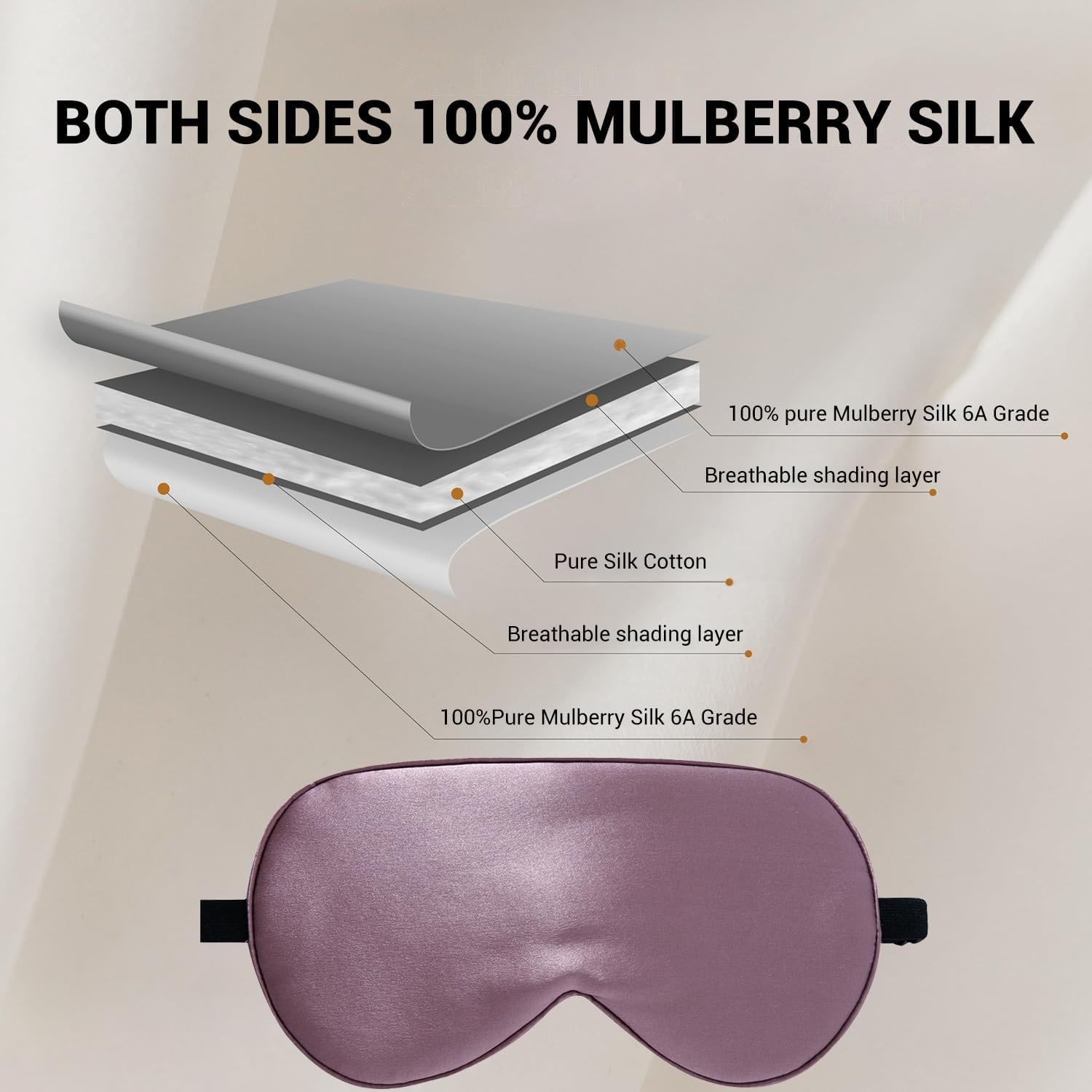
Mulberry silk is the type made from silkworms raised on mulberry leaves, which produces a long, even filament. The grading system goes up to 6A, and that is what this mask uses on both faces. Long filament means fewer joins, fewer slubs and a tighter weave, which you feel as a flatter, smoother surface.
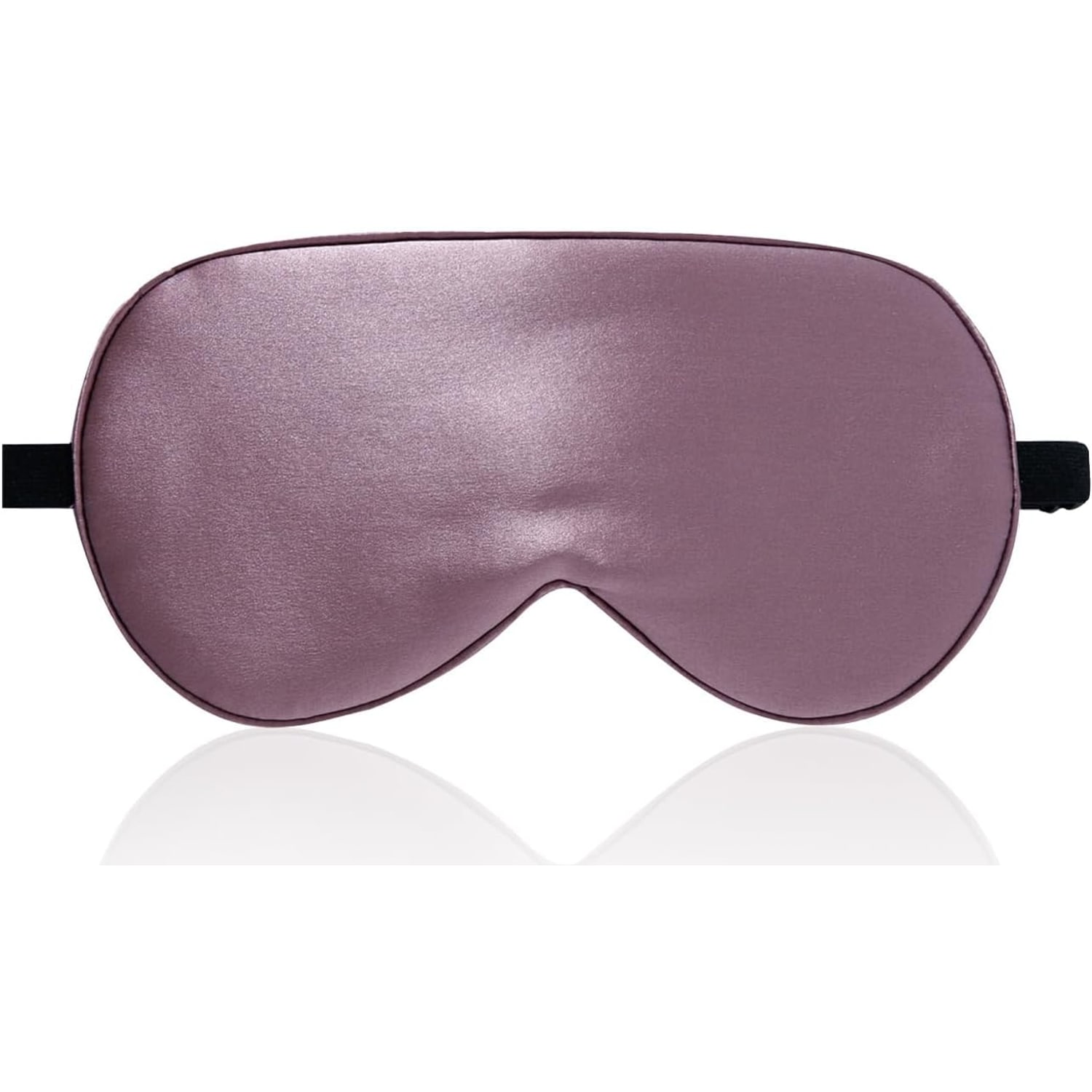
The detail that matters more than the grade is that the silk is on both sides. Plenty of masks that get sold as silk have silk on the outside only and a cheaper backing fabric against your face, which defeats the point. Here the inner face is silk, the outer face is silk, and the reverse is black silk. The only other material is the cotton padding sealed inside.
What the padding is for
A single layer of silk, however nice, is thin. Hold it up to a lamp and you will see the glow come straight through. Padding is what turns a silk eye cover into a mask that actually darkens the room.
Two things happen when you add a cotton layer. First, the fabric stack becomes opaque enough to stop light passing through the front. Second, the mask gains a little loft, so instead of lying flat like a strip of fabric it follows the dip of your eye sockets and the bridge of your nose. That shaping is where the real difference comes from. Most light that reaches your eyes in a mask comes in at the sides and along the nose, not through the front panel.
Cotton padding also keeps the mask breathable. A foam or plastic-backed mask traps warmth and can feel clammy by morning. Cotton and silk both move moisture away reasonably well, which matters if you sleep warm or live somewhere humid.
The strap is the part people underestimate
Almost every complaint about sleep masks comes down to the strap. Too tight and you wake with a line across your temples and a dull ache behind your ears. Too loose and the mask is on your forehead by three in the morning. Plain elastic solves neither problem, because it starts too tight and then relaxes over a few months until it is too loose.
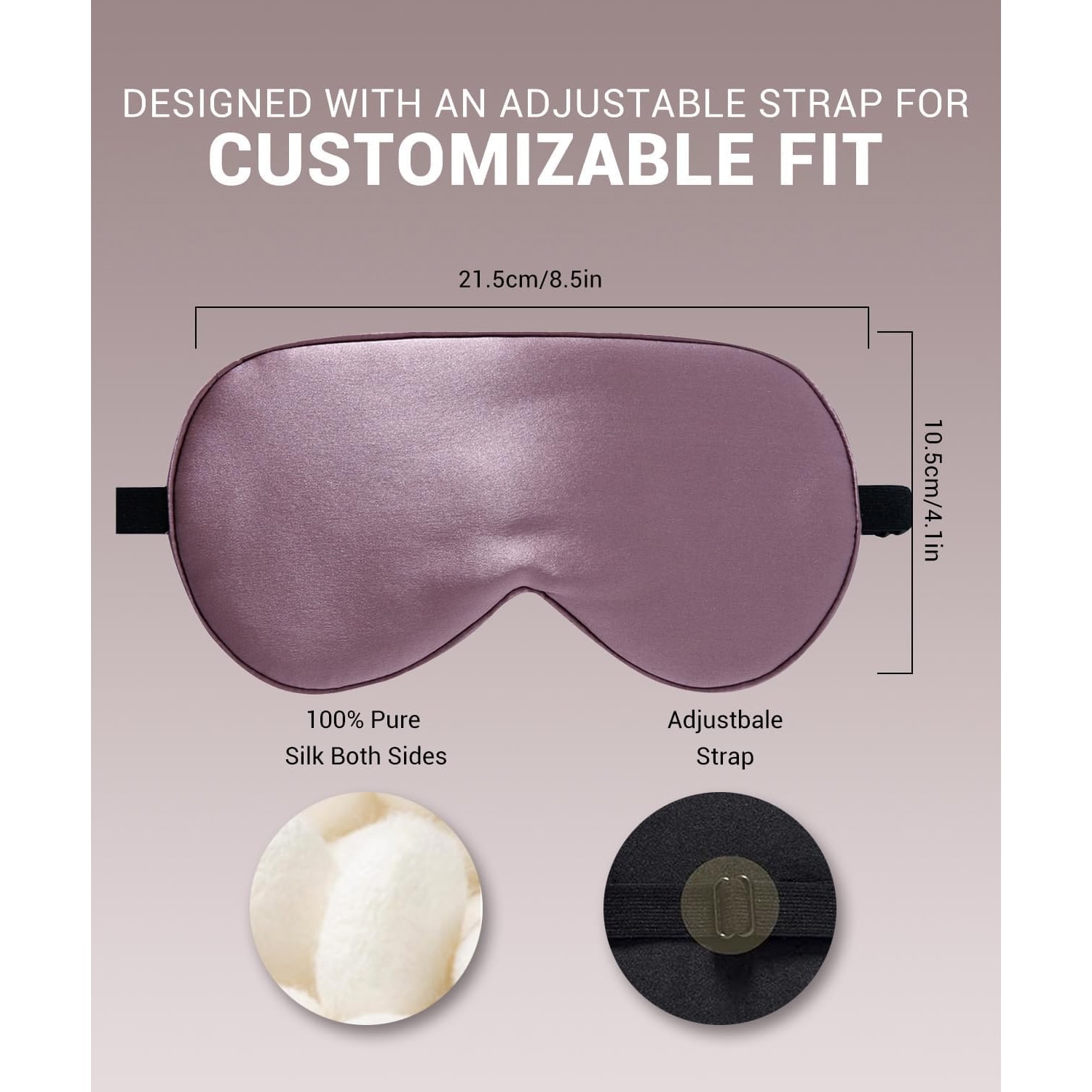
An adjustable strap with a buckle gives you a setting you can fix. You adjust it once, usually on the first or second night, and then leave it alone. If someone else in the house borrows the mask, they can shift it and shift it back. That small bit of control is the difference between a mask that gets worn every night and one that gets abandoned.
One practical tip. Rotate the strap so the buckle sits towards the back or side of your head rather than directly behind an ear. It is a small, flat part, but on a pillow you can feel it, and moving it takes two seconds.
Who this suits
Light sleepers at home are the obvious group. If you wake at first light in June and cannot get back over, a mask buys you another hour or two.
Travellers are the next. On a plane, cabin lights go on and off at the crew's convenience, not yours. A mask that packs flat into a jacket pocket is worth more than one that needs a hard case. Anyone hunting the best silk eye mask for travel usually ends up with something slim and padded exactly like this.
Shift workers and new parents sleep during daylight, which is the hardest kind of sleep to protect. Blackout curtains help, but a padded mask on top of them is what gets a bedroom properly dark at two in the afternoon.
Side sleepers do well with a flat padded mask, as long as the strap is adjustable. There is no rigid frame to dig into the pillow and no deep cup to get pushed out of position when you roll.
People who read in bed next to a partner who does not benefit too. One person gets a lamp, the other gets darkness, and nobody negotiates.
How to choose between mask styles
There are roughly three shapes on the market.
Flat unlined masks are the cheapest. They are thin, they pack small, and they leak light. Fine as a backup, not much use in a bright room.
Flat padded masks, which is what this one is, sit in the middle. They block a lot of light, they are comfortable for most sleeping positions, and they stay slim enough to travel. For most buyers this is the sensible default.
Contoured cup masks have moulded eye cavities so nothing touches the lids at all. People with lash extensions or a real dislike of pressure on the eyes often prefer them. The trade-off is bulk, and they can shift if you are an active side sleeper.
If you are not sure, start with the padded flat style. It is the one that suits the most people and the most situations.
Looking after silk
Silk has a reputation for being fussy. It is not, really. It just dislikes two things, heat and scrubbing.
Wash this mask by hand in cool water with a small amount of detergent made for delicates. Swirl it, do not rub it. Rinse until the water runs clear. Then press the water out in a towel rather than wringing, reshape the mask, and dry it flat somewhere out of direct sun. It is small enough to be dry by the next evening.
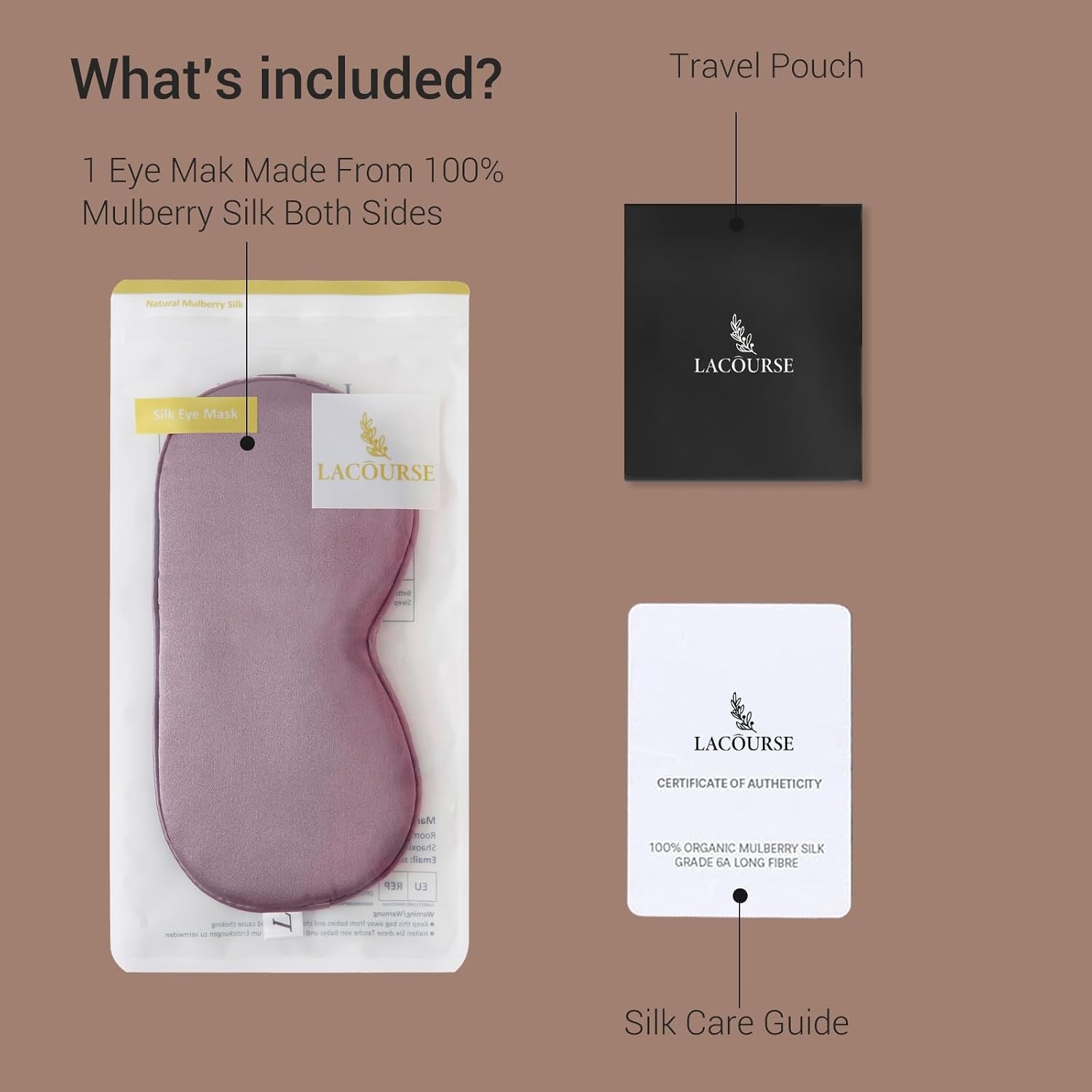
Skip the machine, skip the tumble dryer, skip bleach. If you use night creams or facial oils, give the mask a wash every week or so, because oils are what dull silk over time more than anything else. Store it somewhere it will not snag, ideally in a small fabric bag.
Done this way, a silk mask holds its hand and colour for a long run of nightly use.
A word on colour
The grey purple here is a solid, muted shade with a black silk reverse. It is a practical choice as well as a quiet one. Very pale masks show every mark and pick up visible sheen with age. Very dark ones look stark on a bedside table. A mid-tone grey purple sits between the two, and it reads as calm rather than loud, which is what most people want from something they look at last thing at night.
The short version
If light wakes you, a mask is the cheapest fix there is. If you want one you will actually keep wearing, look for silk on both faces, padding inside, and a strap you can adjust and leave set. This mask has all three. Grade 6A mulberry silk front and back, cotton padding between, and a buckle strap you set once.
Hand wash it, dry it flat, and keep it in your bag for the nights you cannot control the curtains.