
The complete guide
How To Choose A Silk Sleep Mask That You Will Actually Wear
The problem is almost never your bed
People spend a fortune on mattresses and pillows and then sleep in a room with a street lamp pointed at the window. Light is the signal your body uses to decide whether it is night or morning. A sliver of it across your eyelids at five in the morning is enough to start winding your sleep down, even if you do not fully wake up.
Blackout curtains help, but they are expensive, they never quite seal at the edges, and they are useless the moment you are away from home. A sleep mask solves the same problem for a fraction of the cost and fits in a coat pocket. The catch is that most people buy a cheap one, find it hot, scratchy or badly fitted, and give up after three nights.
That is the gap a silk mask fills. It is light enough that you forget it is there and smooth enough that it does not irritate the skin around your eyes, which is thinner and more sensitive than skin anywhere else on your face.
What makes silk different
Mulberry silk is produced by silkworms fed exclusively on mulberry leaves. The result is a long, even filament, and long filaments weave into fabric with very few loose ends poking out of the surface. That is why silk feels slippery rather than fuzzy.
For a sleep mask, that smoothness does two practical things. Skin and eyelashes slide across the fabric instead of dragging on it, so there is less tugging when you turn over. And because the weave is fine and the layer is thin, the mask does not trap heat against your face the way a thick foam or fleece one does.
This mask is listed by the maker as 100% mulberry silk. Momme weight, which is how silk density is normally described, is not stated, so we will not quote a figure. What we can say is that it is a light mask, which is exactly what you want for something worn for eight hours.
The strap matters more than you think
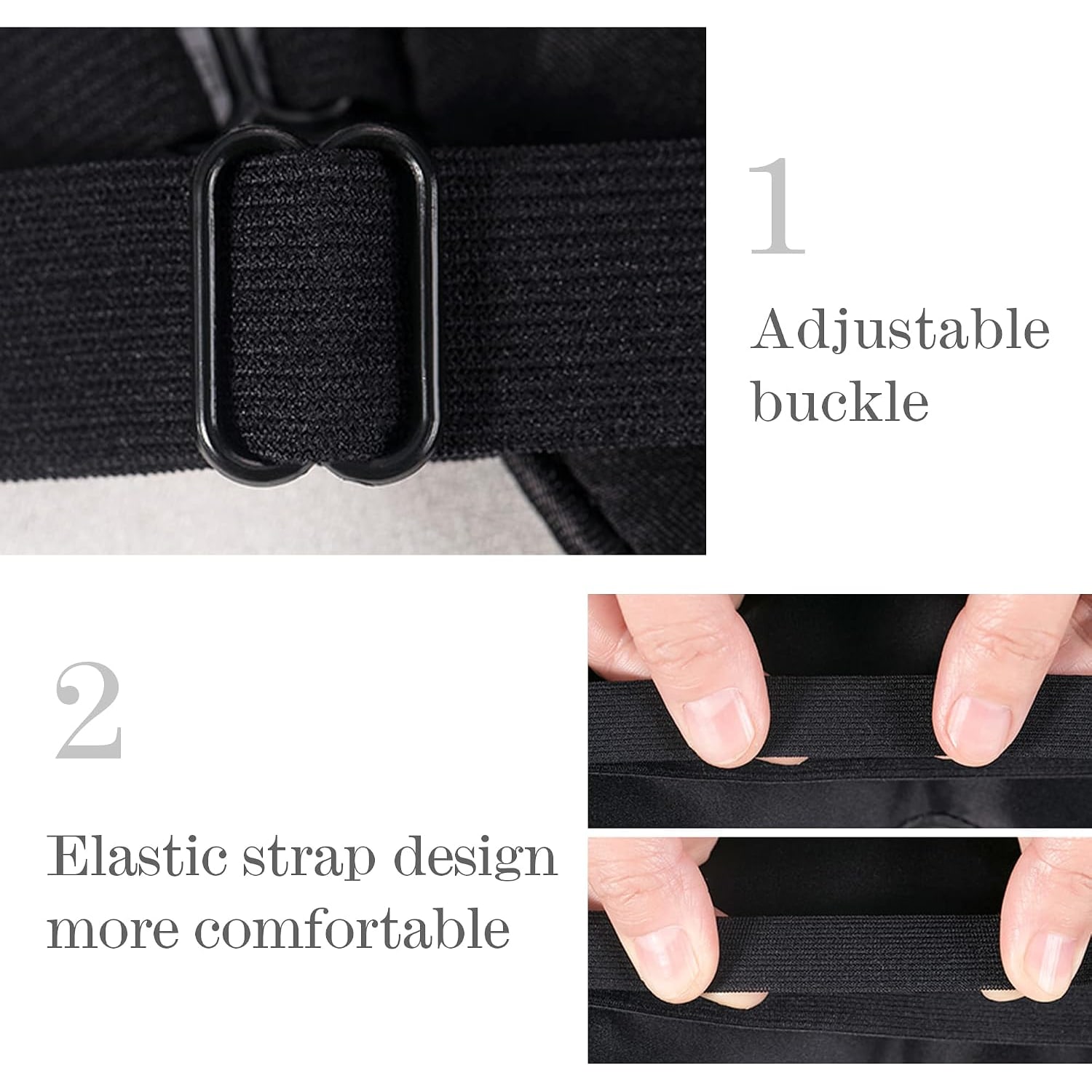
Ask anyone who has given up on sleep masks why, and the answer is usually the strap. Thin elastic digs in behind the ears. Wide elastic rides up over the forehead in the night. Either way you wake up with the mask around your neck.
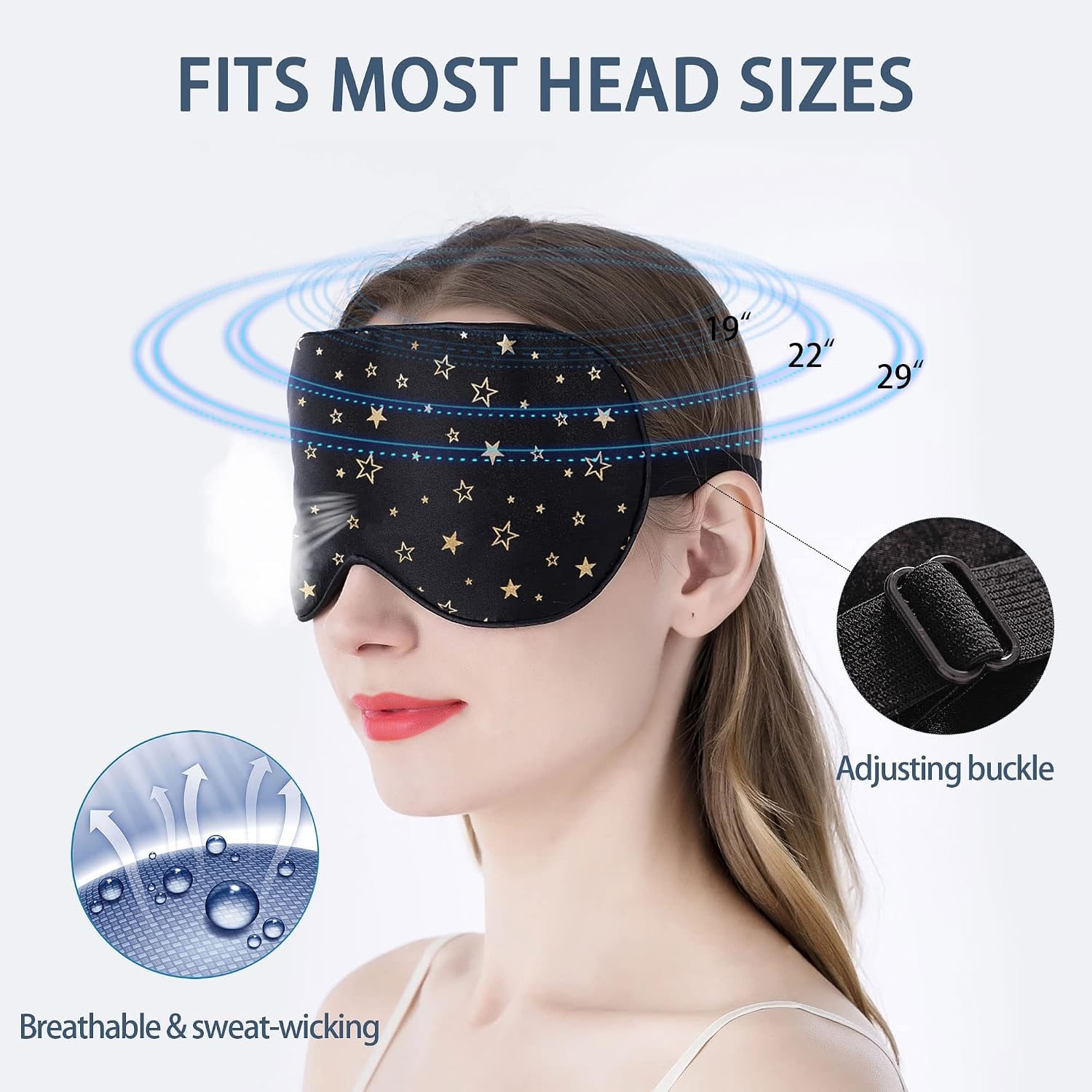
This one uses a hook and loop fastening, which is a better system for a simple reason. You decide the tension. Pull it a little looser if you want zero pressure, or a little snugger if the room is bright and you want to close the gaps at the sides of your nose. You can also change it night by night without any fuss.
One habit to build. Take the mask off by opening the fastening, not by dragging it up over your head. Straps fail at the join far more often than silk fails anywhere, and that one change doubles the life of most masks.
Who this suits
If you sleep beside someone who goes to bed later than you, a mask ends the argument about the reading lamp. If you work nights, it is the single cheapest thing you can do to make daytime sleep possible, because the light coming through a bedroom blind at noon is far stronger than anything you face at night.
Travellers get the most obvious benefit. A light, foldable mask is easy to pack and quick to put on when the cabin lights go up at an awkward hour. A silk eye mask for travel also doubles as a blindfold on a train, in a hostel bunk, or in a hotel room with no proper curtains.
Side sleepers are worth calling out separately. A padded mask with a moulded eye cavity is fine flat on your back but becomes a lump pressing into your cheek the moment you roll over. A flat silk mask like this one stays flat under the weight of your head, which is why it tends to be the one people stick with.
How to choose between masks
A few things to weigh up before you buy any mask.
Fabric. Silk, cotton and synthetics all exist. Silk is the smoothest and the lightest. Cotton breathes but is rougher and holds more moisture. Synthetics are cheap but tend to feel warm within an hour.
Closure. Fixed elastic, elastic with a slider, or hook and loop. Fixed elastic is the one most likely to disappoint after a few months. Adjustable is worth the small extra cost, especially if more than one person in the house will borrow it.
Shape. Flat masks sit against the eyelids. Contoured masks have cups that keep fabric off the lashes but are bulkier. If you wear eye makeup or false lashes, contoured can be worth the bulk. For most sleepers, flat wins on comfort.
Care. Check the washing instruction before you buy, not after. This mask is hand wash only. If you know yourself well enough to know you will never hand wash anything, a cotton mask may suit your life better, even if the silk is nicer.
Looking after it
Hand wash in cool water with a little gentle detergent. Swirl, do not scrub. Rinse until the water runs clear, then press the mask between a clean towel to take the water out. Never wring or twist it, because twisting is what breaks the fibres.
Dry it flat, somewhere with a bit of air but out of direct sun and well away from a radiator. Heat is harder on silk than almost anything else.
Close the hook and loop fastening before washing and before storing. An open hook strip will find a loose thread eventually, and once it has pulled one, the fabric around it starts to look tired.
Wash it every week or two with regular use. Anything that sits against your face overnight picks up skin oils, and oils are what make a mask start to feel grubby long before it looks it. If you use the mask every night, having two and swapping them is an easy way to keep one clean and dry at all times.
A note on expectations
No soft fabric mask gives you total blackout. The nose is the weak point on every design, and if you have a high nose bridge you will see a faint glow at the bottom edge. Tightening the strap by a notch usually fixes it. Tilting the mask slightly lower on the face helps too.
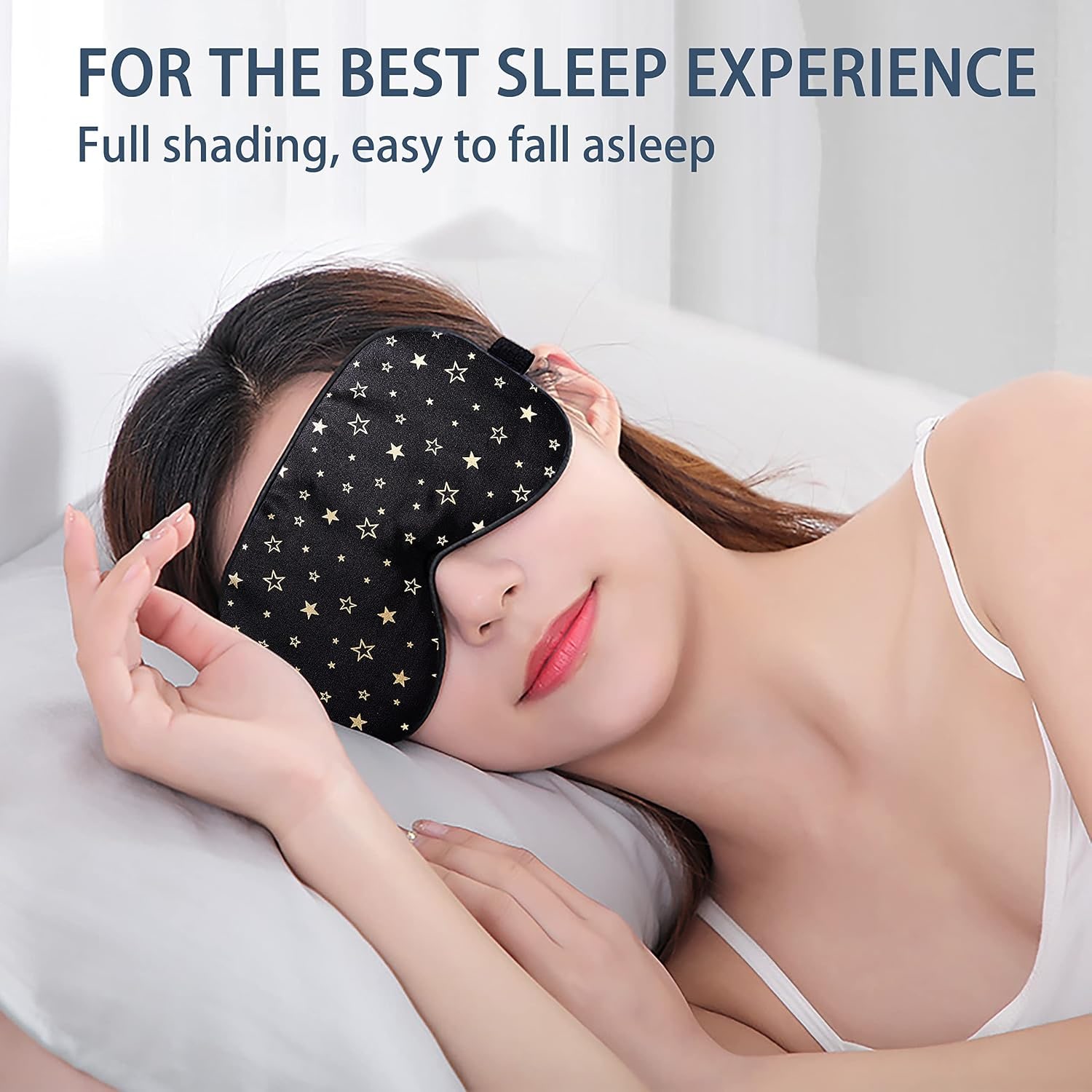
What a good mask does reliably is cut the room from bright to very dim, and that is enough for most people to fall asleep and stay asleep. If you need genuine pitch black, pair the mask with a blind. The two together get you there.
The short version
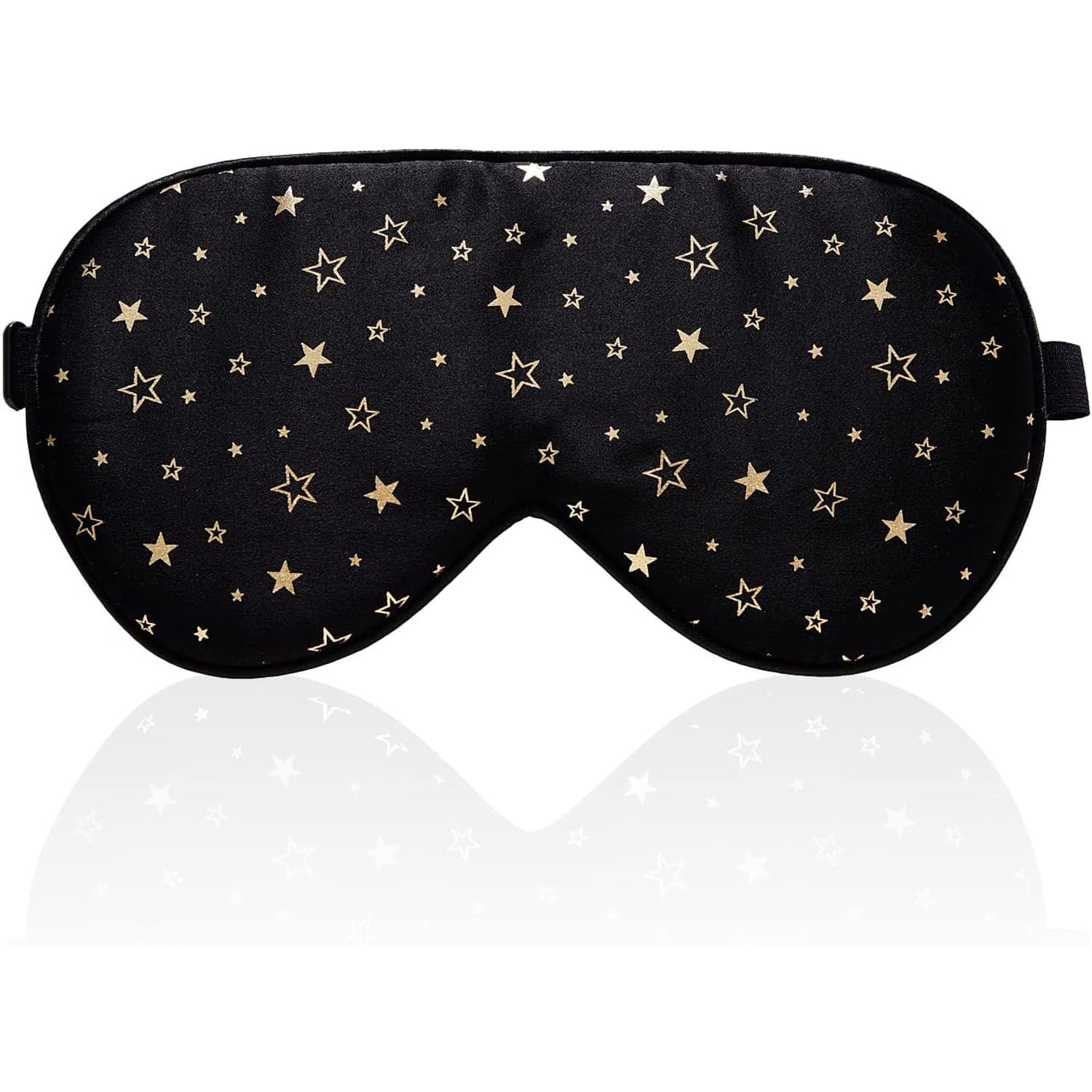
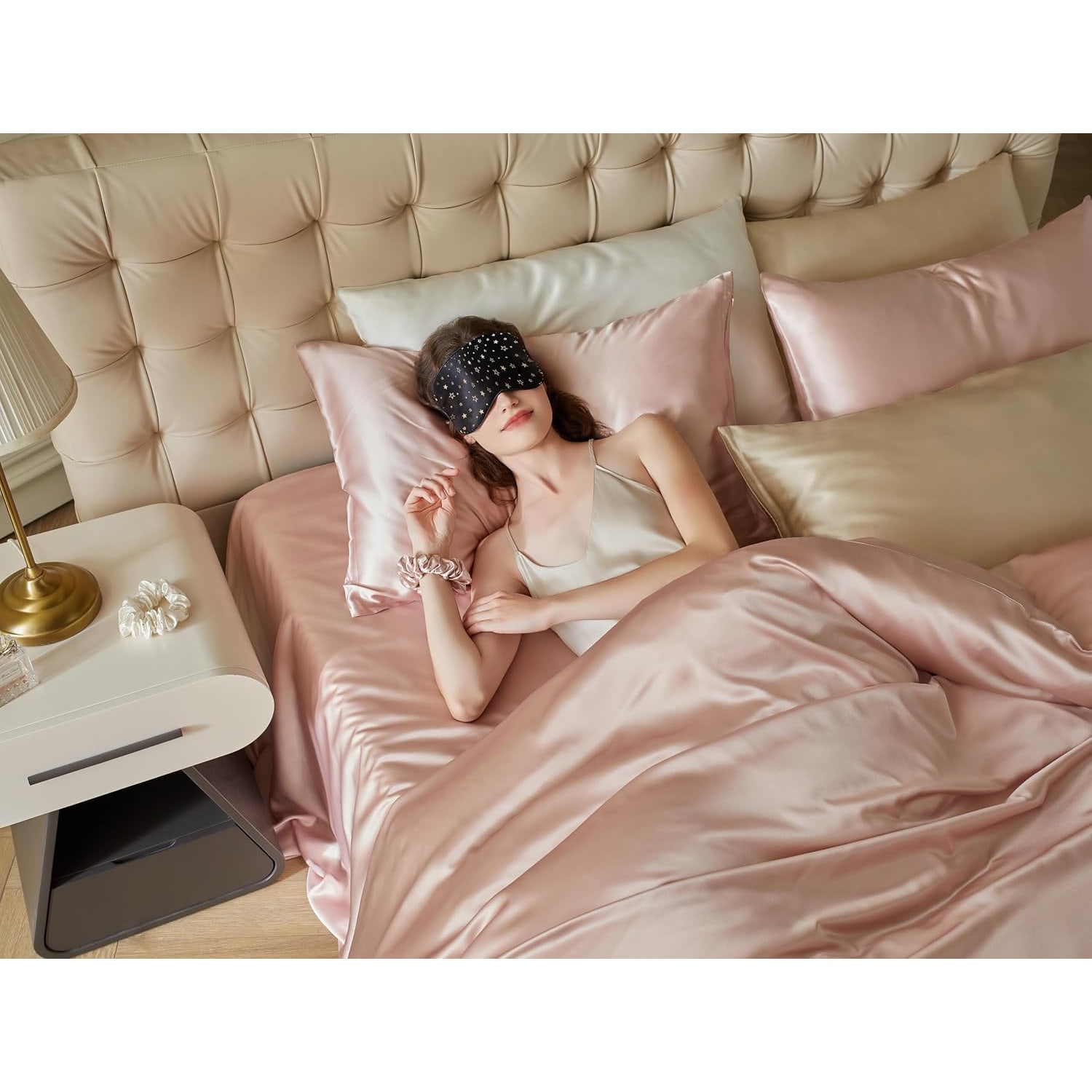
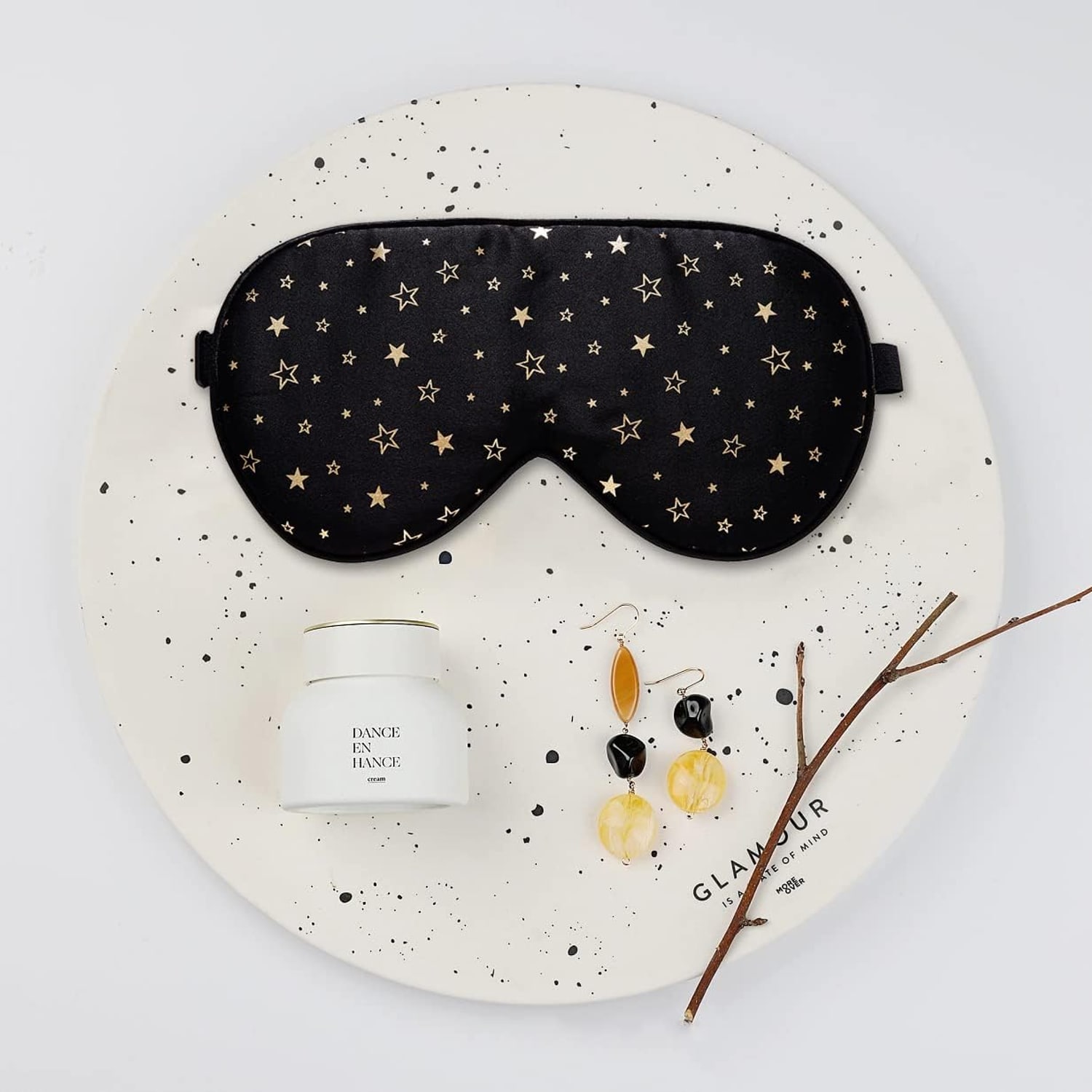
This is a 100% mulberry silk sleep mask in black with a small gold star print, fastened with an adjustable hook and loop strap, light in weight, hand wash only. The silk keeps it smooth against the eyes and the adjustable strap keeps it in place, which are the two things that decide whether a mask lives on your bedside table or at the back of a drawer.
If your room is brighter than you would like, if you sleep during the day, or if you travel and the cabin lights always come on too soon, it is a small purchase that changes how the night goes. Wash it by hand, dry it flat, and it will last.