
The complete guide
How to Choose a 23 Momme Silk Pillowcase That Actually Fits Your Pillow
The problem with most silk pillowcases
Plenty of people buy a silk pillowcase, use it for a month, and quietly go back to cotton. Usually one of two things went wrong. Either the silk was too light and felt more like lining fabric than bedding, or the case did not fit the pillow and spent every night sliding off, bunching up, or pulling at the seams.
Both problems are avoidable. They just come down to two numbers that are easy to check before you buy: the momme weight and the finished size. This guide walks through both, plus what a hidden zip actually changes, how to wash silk without ruining it, and who this particular case suits.
What momme really tells you
Momme, sometimes written mm, is a weight measurement specific to silk. It describes how much a given area of the fabric weighs. Higher momme means more silk packed into the same space, which means a denser, heavier, more durable cloth.
Silk bedding generally runs from around 16 momme at the light end up to about 25 at the heavy end. Below 19 you start to notice the fabric is thin, and it can feel almost papery when you handle it. Around 19 is the common sweet spot. At 23, which is what this case is, you get noticeably more body. The fabric falls instead of floating, it holds its shape on the pillow, and it handles washing better because there is simply more material there.
Weight also affects how the case behaves on the bed. A heavier silk drapes over the pillow and stays where you put it. A very light one tends to shift and crease. If you have tried silk before and found it fussy, the momme number was quite possibly the reason.
Mulberry silk and what grade 6A means
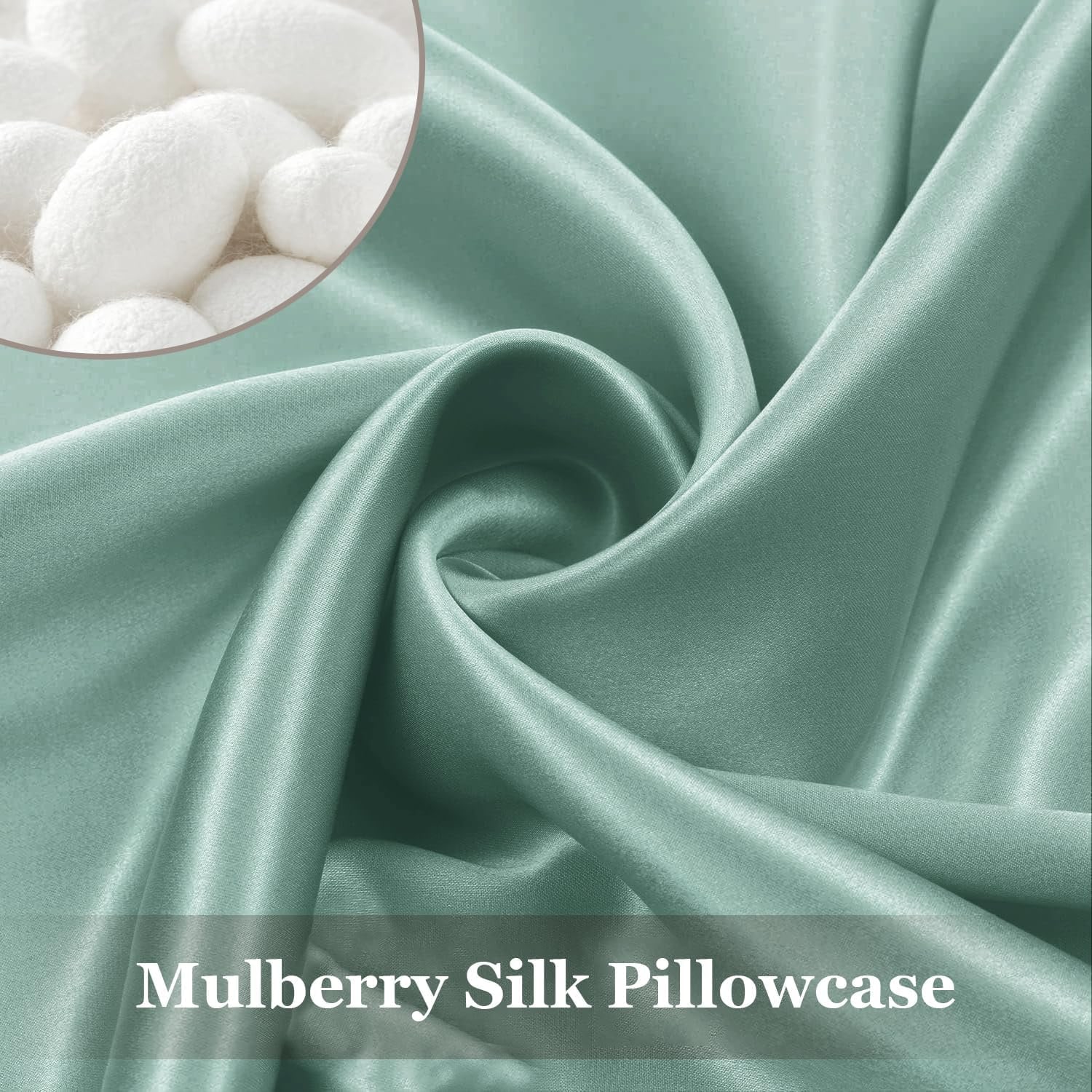
Not all silk comes from the same place. Mulberry silk is produced by silkworms fed exclusively on mulberry leaves, raised in controlled conditions. The result is a long, even filament, which is the key thing. Long filaments can be reeled into yarn with very few joins, and fewer joins means a smoother surface and a more even sheen.
Wild or tussah silks, by contrast, come from shorter and more irregular fibres. They have their own appeal, but they are coarser and the colour tends to be uneven. For a pillowcase, where the whole point is a smooth surface against your face, mulberry silk is the sensible choice.
The 6A grading refers to the quality of that raw filament. It is a mill grading scale, and 6A sits at the top of it. The maker lists this silk as grade 6A at 23 momme. Taken together, those two numbers describe a good quality silk with a decent amount of weight behind it.
Sizing, and why this one needs a tape measure
This is the part people skip, and it is the part that causes returns.
This case measures 50 x 70 cm, about 20 x 28 inches. That is the continental pillow size, standard across much of mainland Europe. It is not the standard Irish or British pillow size, which runs closer to 50 x 75 cm. There is also a square continental size, 65 x 65 cm, which is a different thing again.
Five centimetres does not sound like much, but it is the difference between a case that slips on easily and one that fights you. A pillow that is longer than the case will stretch the seams and leave the fabric drum-tight, which is both uncomfortable and hard on the stitching.
So before you order, pull the case off your current pillow and measure the pillow itself, not the old case. If it comes in at or under 50 x 70 cm, you are fine. If it is closer to 75 cm long, look at a standard sized case instead. If your pillow is a bit smaller than 50 x 70, the case will just sit a little loose, which looks perfectly good on a made bed.
The hidden zip, and why closures matter
Silk pillowcases usually close one of three ways. An envelope flap, where the fabric simply folds over. An exposed zip. Or a hidden zip, where the zip tape is tucked inside a fold so you cannot see it from the outside.
Envelope closures are cheap to make and they look clean, but they have a habit of letting the pillow creep out over the course of a night. If you move around in your sleep, you wake up with half a bare pillow. An exposed zip solves that but puts a visible strip of plastic or metal along one edge, which rather spoils the look of a nice piece of silk.
A hidden zip, which is what this case has, gets both things right. The pillow stays enclosed and the edge stays clean. It is a small detail that makes a real difference to how the case performs over months of use, and for a lot of buyers it is the deciding factor when comparing the best hidden zip pillowcase options against the cheaper envelope style.
One small tip. Put the case on so the zip end sits at the foot of the pillow rather than the top. You will never notice it is there.
Who this suits
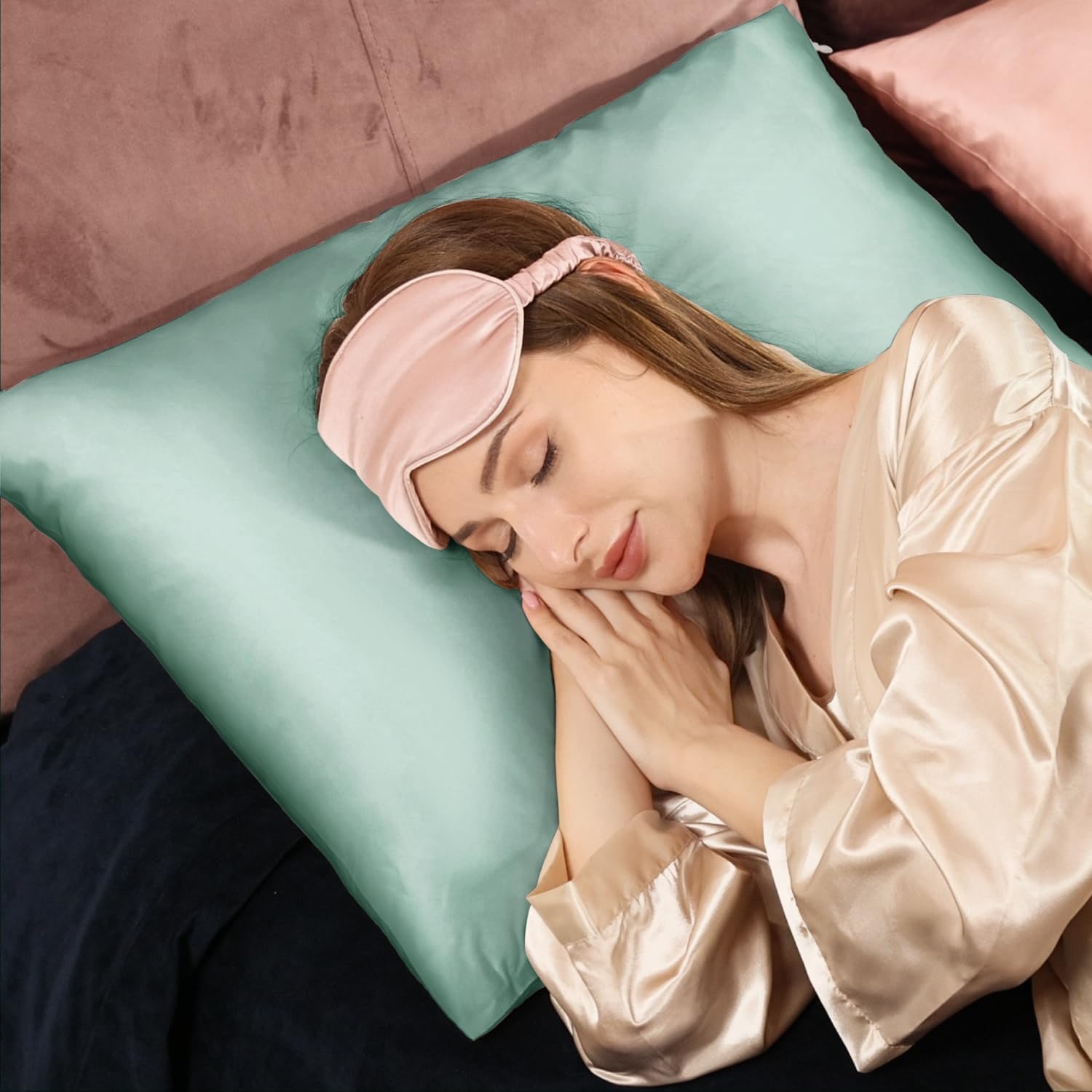
Anyone who sleeps on a 50 x 70 cm pillow and wants a surface that is smoother than cotton. Silk has far less friction than a cotton weave, so hair and skin slide across it rather than catching. That is a property of the fibre, not a promise about anything else, but it is the main reason people switch.
It also suits anyone who has tried a lightweight silk case and been underwhelmed. At 23 momme this is a different experience from a 16 momme case, and the weight is immediately obvious when you take it out of the packaging.
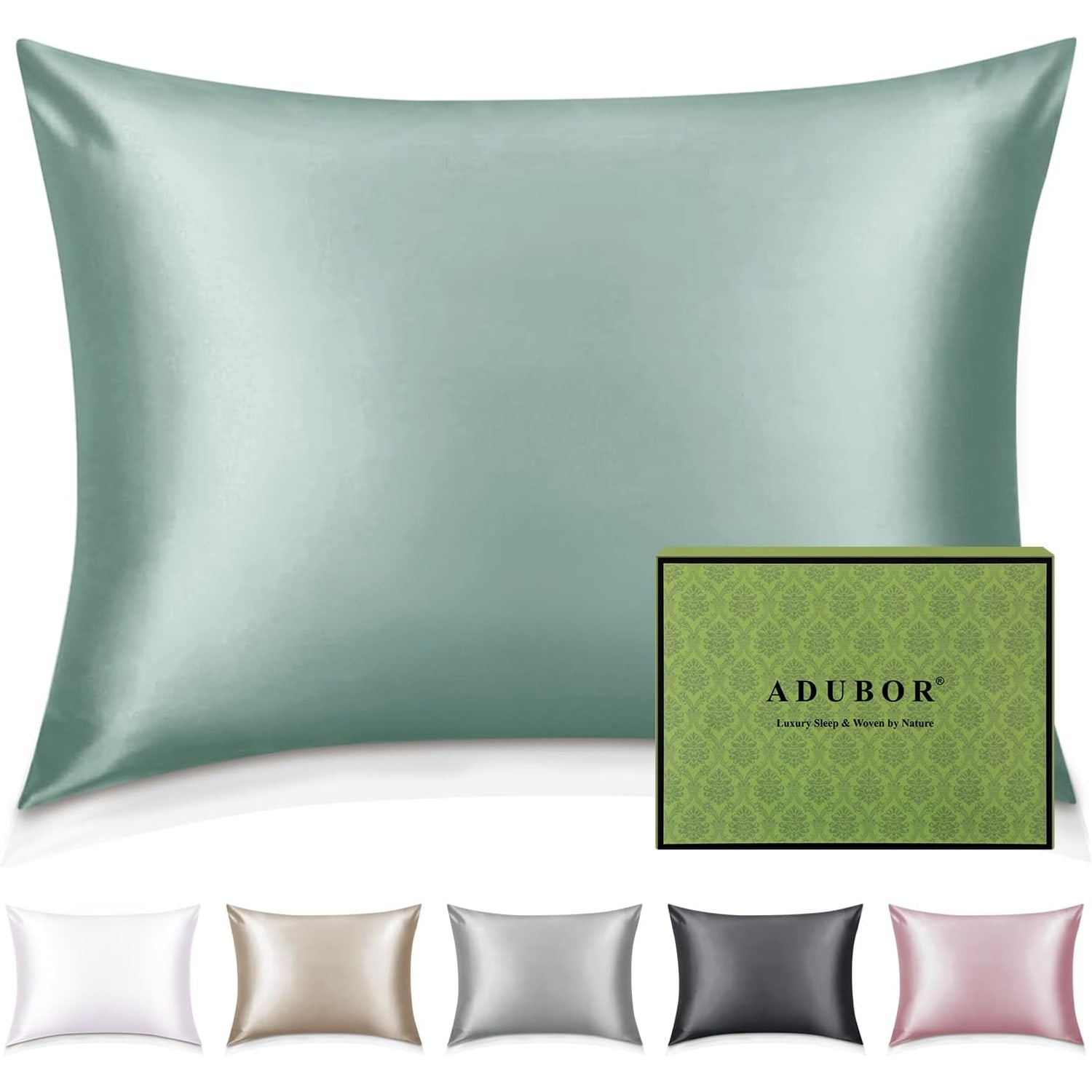
The lake blue is a soft blue-green, solid, with no print. That makes it an easy accent rather than a statement. It works against white, pale grey or oatmeal linen, and the sheen of the silk shifts the tone slightly depending on the light. If your bedroom palette is already busy, a solid colour like this is usually the safer pick.
Caring for silk without wrecking it
Silk is a protein fibre, which means it is closer to wool or hair than it is to cotton. Treat it accordingly.
Wash cool. Hand washing in lukewarm water with a detergent made for delicates is ideal. If you would rather use the machine, put the case inside a mesh laundry bag and run a cold gentle cycle. The bag stops it getting tangled around other items.
Skip the bleach entirely, and skip anything with optical brighteners. Both will attack the fibre and dull the colour. Biological detergents contain enzymes that break down protein, which is exactly what silk is made of, so avoid those too.
Do not wring it out. Press the water out gently between your hands, or roll the case in a towel and press. Then dry flat or hang it in the shade. Direct sun and radiator heat both damage silk and fade dye.
If you need to press it, use a cool iron on the reverse side while the fabric is still a little damp. Keep the iron moving and do not let it sit.
Washing every week or two is a reasonable rhythm. If you use rich night creams or hair oils, go weekly.
Buying a pair
Each order is one pillowcase. If you want a matching pair for a double bed, add two. A lot of people start with one, try it for a week, and then come back for the second, which is a perfectly sensible way to do it.
The short version
Check your pillow measures 50 x 70 cm or less before you order. The silk is grade 6A mulberry at 23 momme, which puts it at the heavier, more substantial end of silk bedding. The hidden zip keeps the pillow in and the edge clean. The colour is lake blue, a soft blue-green solid that pairs easily with most bed linen. Wash it cool, dry it flat, and keep it away from bleach and heat, and it will stay good for a long time.